Podcast: Play in new window | Download (Duration: 16:26 — 18.4MB)
Yes, this is a NEW episode! Thanks to Eesa, Grace, and Viki for their suggestions this week. (Actual episode starts at 3 minutes 28 seconds.)
Find the Backerkit campaign here!
Further reading:
Nix Illlustration: Esconichthys
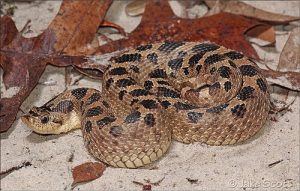
The southern hognose snake [picture by Caudatejake – Own work, CC BY-SA 4.0]:
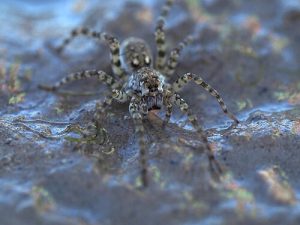
A beach wolf spider [photo by Memer15151 – Own work, CC BY-SA 4.0]:
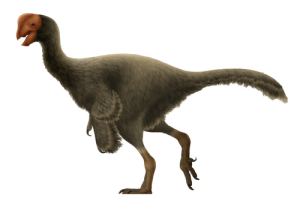
Oviraptor may have looked kind of like this when alive [art by PaleoNeolitic – Own work, CC BY 4.0]:
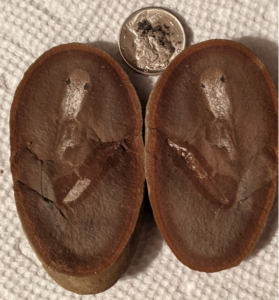
Two halves of an esconichthys fossil:
Show transcript:
Welcome to Strange Animals Podcast. I’m your host, Kate Shaw.
Oh, hi! This is a brand new episode, earlier than I expected! I noticed recently that one of the Patreon episodes I’d scheduled for September is one that I’d already run in the main feed a few years ago. I decided to just make a new episode for this week and move the episode that would have run this week to that September slot, because I have an announcement!
For our five-year anniversary I published the book Beyond Bigfoot & Nessie: Lesser-Known Mystery Animals from Around the World, with a lot of the entries taken from episodes but also some new topics added. I always intended to do a follow-up for our ten-year anniversary, and have even done a lot of work on it. It’s called Small Mysteries, focusing on smaller mystery animals that don’t get a lot of attention. It’s about half the length of Beyond Bigfoot, all or almost all chapters taken from the podcast. But at this point, I don’t think I have time to finish it. I’m staying very busy and happy, with a part-time job taking care of people’s pets while they’re on vacation, and I’m also writing fiction again.
But since that book is half-done, and a lot of people might want a copy even if I don’t add much more to it, I’m going to make it available as an ebook only. Do you remember last time I made a crowdfunding campaign, and the people who backed the campaign got a copy of the book as soon as it was published? I’m doing that again, but NOT for Small Mysteries. It’s for a different book, called The Moonhound, a cozy fantasy set in an alternate reality Smoky Mountains. The main character is a rabbit who moves to the mountains and meets a possum, and they have adventures. Even if this doesn’t interest you, there’s a $1 backer tier and if you click that, you have the option to add the Small Mysteries ebook for $2. That means the book is $3. Does that make sense? I feel like it’s confusing.
The campaign starts on July 15, 2026 and runs through August 15, 2026. If you’re listening to the episode before July 15, 2026, you can click through the link in the show notes and follow the campaign, so that you get an email when it goes live. If it’s between July 15 and August 15, 2026, click the link in the show notes and there’s the campaign! If it’s after August 15, 2026, see if there’s a link in the show notes that will take you to a place where you can buy the ebook.
Okay, that took way too long, so let’s get to this week’s episode! We have some suggestions that have come in recently, so we’ll cover a few of those animals, and we’ll finish up with a small fossil mystery in honor of the book. Thanks to Eesa, Grace, and Viki for their suggestions! A quick shout-out to Remy and Julien, and Dylan, Emily, and Michelle for their suggestions too. I’ll get to those in the 500th episode that will run at the end of August.
We’ll start with Viki’s suggestion, the hognose snake. The name hognose is used for various species of snake, most of them in North and South America, but some in Madagascar. It’s a common snake in many parts of North America, so since we talked about the eastern hognose back in episode 81, let’s talk about the southern hognose in this episode. It’s found along the coastal plain of the southeastern United States, including parts of North and South Carolina, Georgia, and northern Florida, and because it has a restricted range where people like to live too, it’s vulnerable to habitat loss. It used to live in other states too but its range has shrunk considerably since it was first described in 1766.
The southern hognose grows about two feet long, or 61 cm, and like other hognose snakes, its nose turns up like a little pig’s snout. The shape of its nose actually may help it dig into leaf litter and dirt to hide. Some individuals are brown or gray, some are red or yellowish. It has darker blotches on its upper side and adults have white bellies. It has a big head that makes some people believe it’s venomous, but it’s actually harmless to humans and most animals.
The only animals that really need to worry about the hognose are amphibians, like toads, frogs, and salamanders, although it will also eat lizards, small mammals like mice, and even large insects. It especially likes to eat toads, and while some toads are toxic, the hognose snake is resistant to toad toxins. A toad will frequently puff itself up to make it appear larger and make it hard for a snake to swallow, but the hognose has a solution for that too. It has big teeth at the rear of its upper jaws, like fangs in the back of its mouth. It uses those teeth to puncture puffed-up toads so they deflate, just like a horrible balloon.
But the most memorable thing about the hognose is what it does when it feels threatened. Phase one is aggression. The snake will flatten its neck to look more threatening, raise its head like a cobra, and hiss and strike—but without biting. It’s just trying to scare you away. If that doesn’t work, the snake puts phase two into effect. It will flop down and roll onto its back like it’s dead, its tongue hanging out of its mouth. It even emits a foul musky smell from its cloaca. If you call its bluff and roll drama queen snake onto its belly, it will turn onto its back again, because it’s really insistent that it’s dead.
Since we’ve already scared away a lot of people who don’t like snakes, let’s learn about a spider next. Grace suggested we talk about the wolf spider, and also wonders if wolf spiders live in northern California.
Wolf spiders are common throughout the world, and while they look scary, they bite people very rarely and their venom is weak, no worse than a bee sting. The wolf spider with the biggest legspan is Hogna ingens, with a legspan less than 5 inches across, or 12 cm. It lives on one island in the Maderia archipelago, and is a beautiful soft gray with white stripes on the legs. The Carolina wolf spider is the most common one found in North America. A big female can have a legspan of four inches, or 10 cm, but its body is not much more than an inch long, or 35 mm, and the spider actually weighs less than an ounce. That’s barely 28 grams, or just a little heavier than five sheets of printer paper.
The wolf spider is a hunting spider, mostly solitary, and most species don’t spin webs. When a female lays her eggs, she attaches the egg case to the underside of her abdomen so she can take them with her while she hunts insects. When the eggs hatch, the teensy babies ride around on the top of her abdomen for a few weeks until they’re big enough to not need their mother’s protection.
Some species of wolf spider will dig a burrow to rest in, and will jump out and grab any insect that happens by, while other species of wolf spider rest in rock crevices and other small spaces. Males are smaller than females and often have flashier patterns. The Carolina wolf spider is mainly gray or brown with darker and lighter longitudinal stripes down the head and body.
Most species of wolf spider won’t come into your house, but if you do have a wolf spider in your house, you should actually consider yourself lucky. They love to eat cockroaches and ants, which are house pests. The wolf spider hunts mostly by sight and has good vision, and its eyes will even demonstrate eyeshine of various colors, depending on species, if you shine a flashlight around in the dark. Maybe don’t do that if you’re afraid of spiders.
And yes, there are wolf spiders in northern California, because there are wolf spiders in just about every part of the world except for Antarctica! Northern California actually has at least six species of wolf spider. One species does actually build a web, and there’s even a species that lives on the beach. That’s the beach wolf spider, which is a pale sandy color with darker and lighter stripes to help it blend in with sand and pebbles. It’s quite small but it moves really fast, and it’s mostly nocturnal. It lives not just in northern California but throughout beaches in North and Central America.
Next, Eesa sent a list of suggested animals, including oviraptor. I could have sworn we already covered oviraptor, but we haven’t! It’s a really interesting dinosaur, so let’s take a look now.
Oviraptor is a name that means “egg thief,” and it got this name because it was found near fossilized eggs. It lived in what is now Asia about 75 million years ago, and the first specimen was found in Mongolia (still my favorite country) back in 1923. The partial specimen was found lying across a nest of dinosaur eggs. When the dinosaur was described in 1924, it was given the name egg thief because the paleontologist Henry Fairfield Osborn assumed it died while robbing a nest to eat the eggs.
But even Osborn wrote that he might be wrong about the dinosaur, and in the 1990s new discoveries of oviraptor nesting sites proved this was the case. Oviraptor wasn’t stealing eggs, it was protecting them, because they were its own eggs. It probably actually ate fruit, seeds, and other plant material, along with small animals like lizards.
Oviraptor was a small dinosaur that was a little more than six feet long, or about 2 meters, and was the height of a medium to large dog. It walked on its hind legs. It had feathers on its arms and tail, and probably also had feathers over much of its body. It didn’t have teeth but it did have a beak that would have probablylooked a lot like a parrot’s beak. Its arms had three small claws but probably looked a lot like a wing in many ways, although scientists don’t think oviraptor could fly.
In other words, oviraptor probably looked a lot like a big, weird chicken, and like a chicken and many other birds, scientists think it sat on its eggs to keep them warm.
When a bird incubates its eggs, it’s not like you dropping down to sit on a chair. The bird’s feet are typically on either side of the eggs, and the bird squats down carefully so that its underside makes gentle contact with the eggs without crushing them. Female chickens and many other birds have a spot on the lower breast that doesn’t have any feathers, called a brood patch, which contains extra blood vessels just under the skin. This helps keep the eggs warm and is a soft part of the hen’s body, which helps cushion the eggs. We don’t know, but it’s possible oviraptor had something similar to a brood patch, and its feathered arms and tail also helped protect the eggs from cold air and rain. We now have numerous specimens that died while sitting on nests, probably buried in sandstorms, so we know that oviraptor basically brooded its nest the way modern birds do.
Finally, let’s finish with our small mystery fossil. It’s called Esconichthys apopyris and it lived about 308 million years ago in what is now the state of Illinois in North America. 308 million years ago, Illinois was a tropical area and partly covered by a warm, shallow sea. In a particular place known as the Mazon Creek formation, for a few million years conditions were just right to preserve dead animals and plants in astounding detail. A river carried dead plant materials and mud into an estuary along the ocean’s edge, where it sank and settled to the bottom of the sea floor. When an animal died, if it wasn’t eaten by something else, its body sank into this soft muddy mess. The bacteria in the mud produced carbon dioxide that combined with iron also present in the mud, which formed a mineral called siderite. This mineral encased the dead animal and slowed decay long enough for a detailed impression of the body to form in the mud. As the centuries passed and the mud became stone, the fossilized body impression was surrounded by a protective ironstone nodule. That’s why we know about the soft-bodied animals from the area, even though soft-bodied animals rarely leave fossil evidence.
Mazon Creek is where the Tully monster lived, which we talked about in episode 339, but the Tully monster isn’t the only mystery animal discovered there. Another one was Esconichthys.
We have lots of Esconichthys fossils, partly because it seems to have been extremely common, but also because it was a vertebrate. That means it had a notochord, a type of backbone. Most of the fossils we have are body impressions, so we do know a lot about what Esconichthys looked like when it was alive. What we don’t know is what it actually was.
Esconichthys was named for the Earth Science Club of Northern Illinois, ESCONI, and the latter half of its name means fish. But it doesn’t actually seem to have been a fish, even a larval fish. It grew up to about 3 inches long, or 8 cm, and had a pair of very obvious eyes, two pairs of feathery external gills, and a single fin on the underside of its tail. It didn’t have legs or any other fins. Some individuals had wide-set eyes, others had eyes that are close together, which may indicate two separate species, but we don’t know.
Esconichthys fossils are sometimes referred to as ghosts, because the limbless body with two dots for eyes does kind of look like a cartoon ghost. Other people call Esconichthys fossils grasshoppers or blades. This is because the animal’s gills were quite long and are often preserved pointing away from the rest of the body, or sometimes the rear of the body is folded upward. This can make it look roughly like a grasshopper or a pocket knife with one blade unfolded.
Esconichthys has been proposed as a larval lungfish or a larval amphibian, but it doesn’t really match either animal group. It’s the most common fossil found at the Mazon Creek formation by far, preserved in amazing detail, but scientists still have no idea what it is or what it might be related to.
You can find Strange Animals Podcast at strangeanimalspodcast.blubrry.net. That’s blueberry without any E’s.
Thanks for listening!