Podcast: Play in new window | Download (Duration: 17:07 — 19.4MB)
Thanks to Måns, Sam, Owen and Askel for this week’s suggestions!
Further reading:
What controls the colour of the common mānuka stick insect?
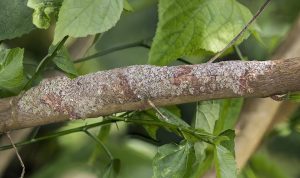
The mossy leaf-tailed gecko has skin flaps that hide its shadow. There’s a lizard in this photo, I swear! [photo by Charles J. Sharp – Own work, CC BY-SA 4.0, https://commons.wikimedia.org/w/index.php?curid=92125100]:
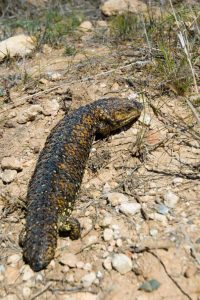
A shingleback lizard, pretending it has two heads:
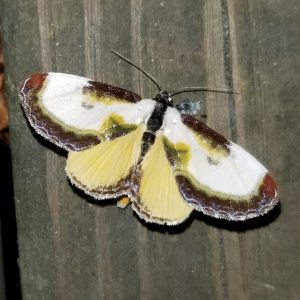
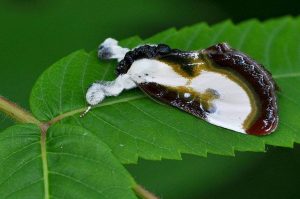
The beautiful wood nymph is a beautiful moth but also it looks like a bird poop:
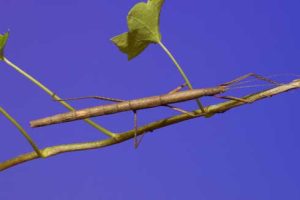
The Indian stick insect (photo by Ryan K Perry, found on this page):
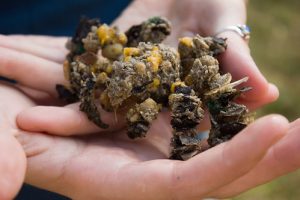
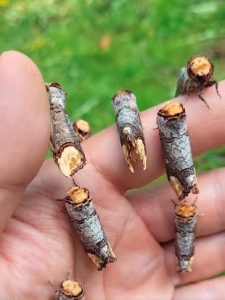
The buff tip moth mimics a broken-off stick. This person has a whole handful of them:
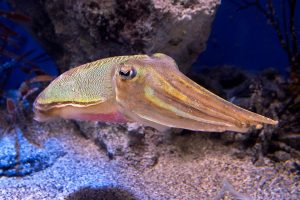
A cuttlefish can change colors quickly [photo by Σ64 – Own work, CC BY 4.0, https://commons.wikimedia.org/w/index.php?curid=77733806]:
Show transcript:
Welcome to Strange Animals Podcast. I’m your host, Kate Shaw.
This week we’re going to talk about a few types of camouflage, a suggestion by Måns, and we’ll also talk about some camouflaged animals suggested by Sam, Owen and Aksel, Dylan, and Nina.
There are lots of types of camouflage, not all of it visual in nature. Back in episode 191 we talked about some toxic moths that generate high-pitched clicks that bats hear, recognize, and avoid. Naturally, some non-toxic moths also generate the same sounds to mimic the toxic moths.
Måns specifically suggested cryptic coloration, also called crypsis. It’s a type of camouflage that allows an animal to blend into their surroundings, which can involve multiple methods.
Some animals have cryptic coloration mainly along the edges of the body, to defeat a skill many predators use called edge detection. A lot of amphibians and reptiles have patches surrounded by an outline, with dark patches having a darker outline and light patches having a lighter outline. This acts as disruptive camouflage, hiding the outline of an animal’s body as it moves around. Some animals take this camouflage even further, with a way to hide their own shadow.
This is the case with the mossy leaf-tailed gecko, which is native to the forests of eastern Madagascar. It can grow up to 8 inches long, or 20 cm, not counting its tail, and it’s nocturnal. Its tail is flat and broad, sort of shaped like a leaf, but it doesn’t disguise itself as a leaf.
The mossy leaf-tailed gecko has a complicated gray and brown pattern that looks like tree bark, and it can change its coloration a little bit to help it blend in even more. At night it’s well hidden in tree branches as it climbs around looking for insects, but in the day it needs to hide really well to avoid becoming some other animal’s snack while it’s sleeping.
It does this by finding a comfortable branch and flattening its body and tail against it so that it just looks like another part of the branch. But to make it even more hidden, it has a flap of skin along its sides that wraps even farther around the branch. Not only do these skin flaps hide its edges, it hides its shadow, since the flaps are really flat and there’s no curved edge of a lizard belly pressed against a branch that a predator might notice.
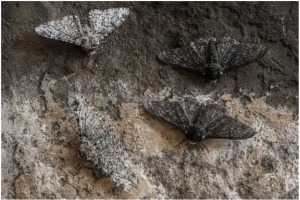
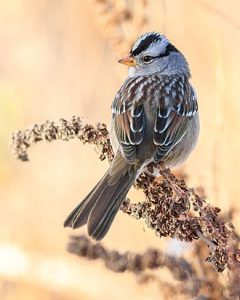
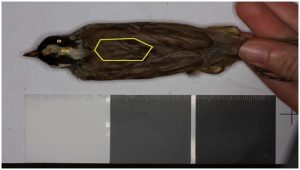
The most common kind of cryptic coloration is called countershading, and it’s so common that you might not even have noticed it although you see it almost every time you see a fish, amphibian, reptile, and many birds and mammals. Countershading is an animal that’s darker on top and lighter underneath, like a brown mouse with a white belly. It’s even found in some insects and other invertebrates.
Countershading is another way to hide a shadow. If a dolphin, for instance, was gray all over, its underside would look darker because of shadows, since sunlight shines down from the sky and makes shadows underneath the body. That would make its body shape look rounder, meaning it stands out more and a predator would notice it more easily. But most dolphins are pale gray or even white underneath. There’s still a shadow, but it’s no longer darker than the rest of the body. The lighter colored underside makes the shadow paler, and as a result, from a distance the dolphin looks almost the same shade all over, which makes it appear flat and the edges of its body harder to see. We even know that some dinosaurs were countershaded, with lighter colored bellies.
Countershading is so common in animals that it’s almost impossible to pick one example. Dylan suggested we learn about the shingleback lizard, an amazing animal found in many parts of Australia. It’s also called the stumpy-tailed lizard, the bobtail lizard, or the two-headed lizard. All three of those names refer to the animal’s tail, which is short and fat and actually looks like a second head. This is an example of automimicry, similar to animals that have markings that look like eyes. The lizard is brown with darker and lighter speckles and it sometimes has yellow spots too. Its belly is pale with dark spots. Its scales are large and overlap each other, and its eyes are tiny, like little black beads. It grows about a foot long, or 30 cm.
The shingleback lives in arid and desert areas, and its tough skin and overlapping scales help reduce water loss. It eats snails, insects, flowers, and other small animals and plants. When threatened, it will open its mouth wide and stick out its large, dark blue tongue. It is an impressively blue, impressively big tongue, and the inside of the shingleback’s mouth is bright pink, so the lizard has a chance to escape while its predator is startled and wondering if the lizard is dangerous. The shingleback can give a painful bite, although it’s not venomous.
The shingleback mates for life, and the female gives birth to two or three live young every year instead of laying eggs. In many reptiles that give birth to live young, the eggs basically remain in the mother’s body until they hatch, and then she gives birth. But in the shingleback’s case, her babies develop in placentas in a process very similar in many ways to placental mammals. The babies eat the placenta after they’re born, giving them a quick first meal, and they’re born ready to take care of themselves.
Sam suggested we talk about animals that can be confused with inanimate objects, which is a type of camouflage referred to as mimicry. Mimicry of all kinds is a really common type of camouflage, like all those harmless insects that have yellow and black stripes to mimic bees and wasps that can sting.
My favorite inanimate object mimic is a moth we talked about in episode 191, the beautiful wood nymph of eastern North America. It has a wingspan of 1.8 inches, or 4.6 cm, and it is indeed a beautiful little moth. Its front wings are mostly white with brown along the edges and a few brown and yellow spots, while the rear wings are a soft yellow-brown with a narrow brown edge. It has furry legs that are white with black tips. But when the moth folds its wings to rest, suddenly those pretty markings make it look exactly like a bird dropping. It even stretches out its front legs so they resemble a little splatter on the edge of the poop.
If you think about it, it makes sense that a tiny animal like an insect would want to resemble something common in its environment that’s also not eaten by very many other animals. For instance, a stick.
Owen and Aksel wanted to learn more about the walking stick, since it’s been a long time since we talked about it, episode 93. Walking stick insects are also called stick insects or phasmids. When I was a kid I was terrified of the whole idea of a stick insect, although I don’t know why. I think I thought one day I’d climb a tree and discover that some of those sticks were not actually part of the tree. I guess I spent a lot of time climbing trees, but I never actually saw a walking stick insect. Maybe that’s because they were so well camouflaged that I thought they were sticks!
Walking sticks live in trees and bushes, naturally, especially in warm areas, but they’re found on every continent except Antarctica. They’re long, thin insects with long, thin legs and they really do look like sticks. Some are green, some are brown or gray, and many have little patterns, projections, and ridges that make them look even more like real sticks. They’re closely related to another type of phasmid called a leaf insect, which as you may have already guessed, mimics a leaf. All phasmids eat leaves and other plant material and most are nocturnal.
Some phasmids can even change colors to help blend in with their background. The Indian stick insect, which is indeed found in southern India although it’s been introduced in many other parts of the world and is considered invasive in some places, grows up to about 4 inches long, or 10 cm. It’s usually brown, but it can change its color in response to light levels by moving pigment granules in its cuticle that absorb and scatter light. The Indian stick insect has many other ways to hide in plain sight. If it feels threatened, it will stretch out with its rear legs folded flat against its body and its front pair of legs stretched forward to make it look even longer. It will stay perfectly stiff even if someone picks it up, but if it thinks it’s in danger, it will spread its front legs to show a patch of red at the base of the legs. This can startle or frighten a potential predator long enough to let the stick insect get away.
One interesting thing about the Indian stick insect is that almost all individuals are females. Females don’t need to mate with a male to reproduce. The female’s babies are little clones of herself, and she drops an egg every so often onto the ground. It looks like a tiny seed, and ants think it’s a seed and will collect it and take it back to the nest to be stored for later. The egg is then protected until it hatches, when the larval insect leaves the ant nest and finds a tree or bush to hide in.
The buff tip moth also looks like a twig or branch when its wings are folded, but not in the same way the walking stick insect does. It looks like a broken-off branch instead. It’s a fairly large moth with a wingspan more than 2 and a half inches across, or 7 cm, and its wings are mostly gray with a rounded buff patch at the end. The end of its abdomen is buff too, so that it looks like the inside part of a tree branch, that’s paler than the bark. It lives throughout much of Europe and Asia, and different populations look slightly different because they’ve evolved to resemble the branches of different species of tree.
Let’s finish with Nina’s suggestion, about an animal that can change colors really fast to blend in with its background. That’s the cuttlefish, and Nina wanted to know how it changes colors so fast, and while we’re at it, why octopuses are so flexible.
The cuttlefish is a cephalopod, closely related to octopuses and squid, but is quite small in comparison. It has eight arms and two feeding tentacles, just like the squid, but its arms are really small in comparison to its mantle. There are over 100 species known so far, most of which are small enough to fit in the palm of your hand. But unlike the squid or the octopus, the cuttlefish has an internal structure called the cuttlebone. It’s not a bone at all but a modified shell, which is your reminder that cephalopods are mollusks and are distantly related to clams, snails, and many other animals that have shells. The cuttlebone helps the cuttlefish stay buoyant without effort, and it also incidentally makes the body a little more structured than its squid and octopus cousins.
Octopuses are flexible because they have no bones. Basically the only hard structure in an octopus is its beak. A cephalopod’s mouth is in the middle of its arms, so it’s usually hidden from view. Way back in episode 142 we talked about how octopus muscles work, so let’s revisit that briefly. In animals with bones, muscles are attached to the bones. But octopuses don’t have bones.
The octopus’s muscles are structured differently than muscles in animals with bones. Our muscles are made up of fibers that contract in one direction. Let’s say you pick up something heavy. To do so, you contract the fibers in some muscles to shorten them, which makes the bone they’re attached to move. Then, when you push a heavy door closed, you contract other muscles and at the same time you relax the muscles you used to pick up something heavy. This pulls the arm bone in the other direction.
But in the octopus, the fibers in its muscles run in three directions. When one set of fibers contracts, the other two tighten against each other and form a hard surface for the contracted fibers to move. So they’re muscles that also sort of act like bones. It’s called a muscular hydrostat, and it actually can result in muscle movements much more precise than muscle movements where a bone is involved.
So, if you combine the octopus’s strong, precise muscle movements with its general lack of hard structures, you get a very flexible animal. Basically an octopus can squish itself through extremely small openings, as long as its beak will fit through. This can make it really hard to keep an octopus in captivity, because in addition to being flexible and squishy, the octopus is also really intelligent. It can survive for short periods of time out of the water, and it can figure out how to open its enclosure and get out to explore, or just escape.
But, back to the cuttlefish, which is small and needs to hide from predators. Like other cephalopods, the cuttlefish can change color and pattern in less than a second, and can even change the texture of its skin if it wants to look bumpy like the rocks around it.
Cephalopods have specialized cells called chromatophores in their skin. A chromatophore consists of a sac filled with pigment and a nerve, and each chromatophore is surrounded by tiny muscles. When a cuttlefish wants to change colors, its nervous system activates the tiny muscles around the correct chromatophores. That is, some chromatophores contain yellow pigment, some contain red or brown. Because the color change is controlled by the nervous system and muscles, it happens incredibly quickly, in just milliseconds.
But that’s not all, because the cuttlefish also has other cells called iridophores and leucophores. Iridophores are layers of extremely thin cells that can reflect light of certain wavelengths, which results in iridescent patches of color on the skin. While the cuttlefish can control these reflections, it takes a little longer, several seconds or sometimes several minutes.
Like other cephalopods, the cuttlefish uses its ability to change color and pattern in order to hide from predators. It also uses these abilities to communicate with other cuttlefish, because it’s a social animal. It will also sometimes frighten potential predators away with a bright, sudden display of color changing.
The most amazing thing of all is that cuttlefish can’t see colors. They have no color receptors in their eyes. But they accurately change color to match their background, even though they can’t see the color, and they can even do so if it’s almost completely dark. While scientists have some theories as to how the cuttlefish manages this, we don’t yet know how they do it for sure. So it is still a mystery!
You can find Strange Animals Podcast at strangeanimalspodcast.blubrry.net. That’s blueberry without any E’s. If you have questions, comments, corrections, or suggestions, email us at strangeanimalspodcast@gmail.com.
Thanks for listening!