Episode 482: Smoky Mountain Mystery Animals

I took this episode from an article I wrote for Flying Snake magazine, which was published in December 2020 (Vol. 6, #18).

Show transcript:

Welcome to Strange Animals Podcast. I’m your host, Kate Shaw.

The Great Smoky Mountains is a subrange of the Appalachian Mountains, which stretches from the middle of Alabama in the United States north into southeastern Canada. The Appalachians formed when the world’s continents crunched together to form the supercontinent Pangaea. The southern Appalachians formed separately and later than the northern Appalachians, around 270 million years ago.

The Appalachians were once as high as the Rockies or Himalayas, but by the time the dinosaurs went extinct, they had eroded down to the mountain cores. Sediment weathered from the peaks and filled in valleys. But during the Pleistocene, when massive glaciers covered the northern parts of North America, the weight of the ice pushed the North American plate down, causing the southern part of the plate to rise. Eventually the ancient mountains’ roots were a thousand feet (300 m) above sea level again. Rivers that once flowed east into the Atlantic Ocean or west into the remains of the shallow Western Interior Seaway shifted their courses to flow northward. Streams that once meandered across the land now plunged down steep slopes and dug gorges into the rock. And over thousands of years, animals and plants retreating from the ice migrated southward along the mountain range.

When the climate warmed some 11,000 years ago and the ice age glaciers melted, many cold-adapted species were trapped in the peaks of the southern Appalachians. One of the highest peaks is Mount LeConte, with its highest point, High Top, measured at 6,593 ft, or 2,010 meters. I hiked Mount LeConte on 7 May, 2016 when the weather in nearby Knoxville, Tennessee was a warm 82 Fahrenheit, or 27.8 Celcius, but there was snow on the mountain that morning. I wrote my name in it. A spruce-fir forest grows on the upper slopes, a remnant of forest that grew throughout the mountains during the last ice age. The climate at the peak of Mount LeConte is more like that of southern Canada than the warm, humid southeastern United States.

The Great Smoky Mountains National Park was established in 1934 to protect the mountains along the Tennessee/North Carolina border. No one lives in the park’s 800 square miles (2,072 square km), which receives up to 90 inches [2.29 m] of rain a year, some of it from hurricanes that sweep up from the southern Atlantic or the Gulf of Mexico. Large tracts of old-growth forest still remain in the park too.

So as you can see, the Smokies are a biodiversity hotspot. In 2018, the park announced its 1,000th species discovered that is new to science, which by July 2020 had grown to 1,025. Overall, 20,000 known species live in the park as of 2019 and scientists estimate that up to 100,000 more are yet to be discovered.

The Smokies are heavily forested, of course, but some mountain summits and crests have no trees. Instead, native grasses and shrubs grow. They’re called grassy balds and no one is sure why they exist. The prevailing theory is that Pleistocene megaherbivores opened the forests for grazing, and after their extinction, the balds remained open due to bison, elk (wapiti), and deer. When white settlers moved into the area, they used the balds to graze cattle and other livestock. Remains of mammoth and mastodon, musk ox, ground sloth, and other megaherbivores have been excavated from various balds throughout the park.

Amphibian enthusiasts call the Smokies the Salamander Capital of the World, with 30 known species. Largest of these is the hellbender, which we talked about in episode 14, a giant salamander that can grow nearly 2 ½ feet long, or 74 cm, and which lives in swift-moving mountain streams. It’s most closely related to the Chinese and Japanese giant salamanders, which can grow over twice as long as the hellbender. Twenty-seven of the salamanders found in the Smokies are lungless, in the family Plethodontidae. Instead of breathing with lungs or gills, the lungless salamanders absorb oxygen through their skin. Of these, the red-cheeked salamander is endemic to the Smokies—that is, it’s found nowhere else in the world.

The red-cheeked salamander lives in forests in high elevations. It can grow up to seven inches long, or 18 cm, and is gray or black with bright red patches on its face. It spends the day in a burrow, then comes out at night to find insects in the leaf litter. But it’s hard to tell apart from the imitator salamander, although the imitator only grows a little over four inches long, or 11 cm. The imitator has red cheeks but its body is patterned black and brown instead of solid gray or black. Sometimes its cheeks are yellow, too, while the red-cheeked salamander only ever has red cheeks.

Another animal found only in the Smoky Mountains, although it may also be present in mountains outside of the park, is a species of jeweled spider fly called Mary-Alice’s emerald (Eulonchus marialiciae). Mary-Alice’s emerald has a metallic-green body and yellow legs, and the adults eat nectar. But the larvae eat spiders. Specifically, they parasitize spiders. After hatching, the larva goes in search of a spider, especially trapdoor spiders that live in burrows. When it finds one, it works its way into the spider’s body and eats it from the inside out, eventually killing it. Then it pupates in the burrow and emerges as an adult spider fly. It prefers high elevations that are cool and moist.

A less horrific animal found in the Smokies is the Carolina northern flying squirrel. It was one of the species whose ancestors migrated south along the Appalachians during the Pleistocene. Then, after temperatures started to warm, the cold-adapted flying squirrel migrated north again. Some populations remained on mountaintops in the Smoky Mountains and have been isolated for thousands of years, evolving into a subspecies of flying squirrel found only in high elevations of the Smokies. It’s much rarer than the southern flying squirrel that lives throughout the southeastern United States, and prefers spruce forests instead of the hardwood forests that southern flying squirrels like. But the spruce forests are threatened by climate change, the introduced woolly adelgid insect that kills fir trees, and pollution in the form of acid rain and pesticides that travel to the mountains from other states and even other countries.

The Carolina northern flying squirrel has a patagium of furry skin that connects its front and back legs. When it jumps from a branch, it stretches its legs out and uses the patagia to glide to a new perch. It’s clumsy on the ground, though, and spends most of its time in trees. It mostly eats fungi, mushrooms, and lichens, but will also eat nuts, insects, bird eggs and even baby birds, and other plant material like tree sap and buds.

Bobcats still live in the Smokies, but the cougar, or mountain lion, was supposedly killed off in the area by the end of the 19th century. The U.S. Fish and Wildlife Service removed the eastern cougar subspecies from the endangered species list in 2018, since it is supposed to be extinct. The last cougar in what is now the park was supposedly killed in 1920. But sightings continue in the Smokies, close to a dozen a year, and some sightings are compelling, like the 2002 report of a cougar crossing a road in the park, spotted by a veterinarian who treated captive cougars in his practice. Considering how seldom seen the bobcat is despite it being relatively abundant, it’s possible that a small number of cougars still live in the park—either animals that have moved back into the mountains from elsewhere, or a relict population.

The red wolf is native to the eastern United States and was once common in the Smoky Mountains, but was killed off by white settlers throughout most of its range. Where it remained in the wild, it interbred with closely related coyotes, until it was declared extinct in the wild in 1980. Fortunately, by then a captive breeding program was in place. Starting in 1991, 37 red wolves were released in the Great Smoky Mountains National Park in Tennessee, following the release of 63 red wolves into the Alligator River Natural Area in North Carolina a few years earlier. But the release didn’t go well in the Smokies. Wolves are shy and need enormous territories with lots of game. Before long some wolves were leaving the park and attacking livestock. Others died of parvo virus, especially wolf pups.

Worse, this was about the same time that coyotes moved into the area from the west. The wolves started interbreeding with the coyotes, and the coyotes also competed with the wolves for food. In 1998, the Fish and Wildlife Service ended the program and recaptured all but one of the wolves originally released into the park.

The North Carolina release went better, with a population peak in 2006 estimated at nearly 130 wolves. But that program was suspended in 2015, and without management of the wild population, the number has dwindled. As of 2019, only 14 wolves remain in North Carolina—and that’s the entire population of red wolves in the wild.

But sightings of red wolves continue in the Smokies. The trouble is that the red wolf looks very similar to the coyote. It’s taller and larger, with a more pronounced reddish shade to its coat, but even experts can have trouble telling the two species apart if they can’t get a good look at the animal. Most likely people are seeing coyotes, possibly ones descended from red wolf/coyote hybrids born during the reintroduction program.

The biggest mystery in the park is the occasional sighting of a Bigfoot-type creature. Most sightings are probably bears, though. An estimated 1,500 American black bears live in the Smokies, and while some bears get used to hikers and tourists, most are shy and seldom seen. A black bear keeping an eye on hikers or cars will sometimes stand on its hind legs for a better view, and would naturally look like a hulking humanoid if glimpsed. But other sightings aren’t so easy to explain.

In February of 2009, a photographer named Deb Campbell was hiking the Middle Prong Trail in the snow. The Middle Prong Trail passes three major waterfalls and many smaller ones as it follows along a tributary of the Little River. She had the trail almost completely to herself—she says she only saw one person the whole time. Later she reported, “[A]t some point I am photographing along the stream and I start to smell a gawd awful stench. Not really like anything I had ever smelled before. I look around, see nothing, listen intently…nothing. So I finish up at that spot and go further up the trail.” The smell receded behind her but the snow increased, so finally she turned around to hike out. Around the area where she smelled the stink earlier, she started feeling watched. She stopped long enough to secure her camera gear for much faster hiking in slick conditions, when she heard a deep growl that she described as “very low, not like a cat, almost guttural.” Needless to say, she got off the mountain as quickly as possible.

The black bear doesn’t truly hibernate since its body temperature remains normal instead of dropping, but it does find a den in cold weather and will sleep for long stretches. It may emerge from its den occasionally during the winter during warm spells, but for the most part it’s asleep in its den from around November through March in the Smoky Mountains. But Campbell was hiking in February during a snowfall, with snow already on the ground. A bear would most likely not be out of its den in that weather unless it had been disturbed.

And bears don’t actually smell bad. During the winter hibernation most bears don’t defecate at all. Any feces left in a bear’s digestive tract harden to form a fecal plug. If it does feel the need to defecate near the end of the winter, it will do so just outside its den, but the fecal plug has very little odor. Even under ordinary conditions, unless a bear has been eating carrion, it will smell no worse than a dog that needs a bath.

Not only that, black bears don’t actually growl. They make grunty, huffing noises when warning people away or when males fight in the summer, and a frightened bear will moan, but they don’t growl like a dog.

It’s possible that Campbell hiked past a bear that had emerged from its den early and had found and eaten carrion, possibly roadkill, and that she was so close to the bear without seeing it that she smelled its breath. That’s almost more frightening than the thought of passing near a Bigfoot. The growl might have come from a different animal, a coyote or who knows, maybe even a red wolf. Or Campbell might have encountered a creature sometimes called a skunk ape due to its foul odor.

The skunk ape is most commonly reported in Florida swamps, but sightings—or smellings—have come from many other states. The smell is sometimes described as that of rotting food and roadkill on a hot day. A bear or other animal that has been rooting around in garbage bins can pick up this odor, especially in hot weather, but it’s hard to believe that a bear would be actively foraging so much in winter that it would smell like trash. January and February are the depths of winter in East Tennessee. The bears are hibernating, not foraging.

Thanks for your support, and thanks for listening! This is what a couple of fighting bears sound like:

[bear sounds]

Episode 044: Extinct and Back from the Brink

Our episode this week is about some causes of extinction, but to keep from getting too depressing we’ll look at a lot of animals that were brought back from the brink of extinction by people who saw a problem in time to put it right. We’ll learn a lot about the passenger pigeon this week especially. Thanks to both Maureen and Emily for their suggestions! I didn’t mean to lean so heavily on North American animals in this episode–it just happened that way. I try to mix it up a little more than this ordinarily.

The passenger pigeon (stuffed):

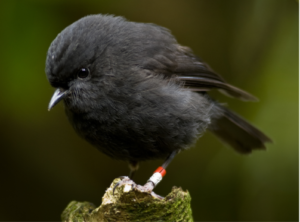
The tiny black robin. It fights crime!

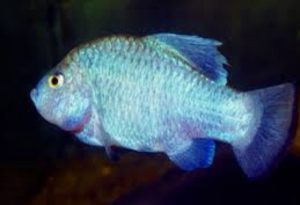
The Tecopa Pupfish is not happy about being extinct:

The West Virginia Northern Flying Squirrel SO CUTE:

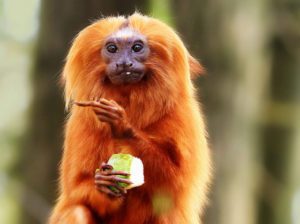
This is what the Golden Lion Tamarin thinks about habitat destruction:

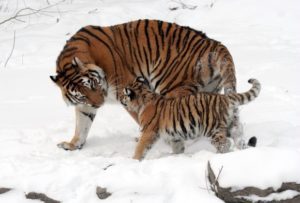
A rare Amur tiger dad hanging out with one of his cubs:

The Organization for Bat Conservation

Episode transcript:

Welcome to Strange Animals Podcast. I’m your host, Kate Shaw.

This week we’re going to learn about how animals go extinct, with examples of lots of animals who’ve gone extinct and others that have been saved from extinction by human intervention. Both topics were suggestions by Maureen, who also suggested several of the animals I included. I could have kept adding to this episode until it was 24 hours long, but I had to stop somewhere, and now that I’m recording I realize there are aspects of extinction I didn’t address at all.

Extinction means that a population of life forms have all died. That sounds pretty definitive, but it’s also hard to know exactly when it’s happened for any given species. Sometimes you can look online and find the specific day that the very last animal of a species died. In the case of the passenger pigeon, that was September 1, 1914, when a captive bird called Martha was found dead in her cage. Martha had been kept in the Cincinnati Zoo long after the last wild passenger pigeon was shot around 1901. But we don’t know for sure that she was the very last passenger pigeon alive at that point. Passenger pigeons were spotted in the wild for years after Martha died.

The passenger pigeon looks similar to the mourning dove, which is a common and very pretty dove throughout most of North America, but it’s not all that closely related. The passenger pigeon was a swift and elegant flyer but was awkward on the ground. And while mourning doves have a soft, musical call, the passenger pigeon apparently didn’t sound very musical at all. Its calls were mostly loud, harsh clucks that were described as deafening when one of the massive flocks of birds took off in alarm.

So what caused the passenger pigeon to go extinct? As is often the case, it wasn’t just one thing. We’ll come back to the passenger pigeon later, but for now let’s discuss one rather unusual cause that contributed to its extinction.

The passenger pigeon was famous for its numbers. There may have been as many as five billion birds alive at any given time, in flocks that numbered millions of birds each. I’m not exaggerating, either. A single flock could take an entire day to fully pass overhead and literally darkened the sky, there were so many individual birds. With so many birds, it wasn’t that hard for hawks and other hunting birds to catch as many pigeons as they could eat—but there are only so many hawks, and millions upon millions of pigeons. The passenger pigeon also nested in a relatively small area within its eastern North American range. Its nesting colonies were so huge they were called cities. A female laid one or two eggs, which both parents incubated. Sometimes there were so many pigeons in a tree that limbs would break off. By the end of nesting season, pigeon poop underneath roosts could be as deep as a foot, or 30 cm.

And while millions of adult birds were tending millions of eggs and babies, predators gorged themselves on pigeon. Hawks, eagles, owls, and other birds of prey naturally caught lots of pigeons, but other animals moved in to take advantage of the buffet. Bears, foxes, wolves, mountain lions, and smaller animals like possums and raccoons would all eat as much pigeon as they could catch. But there were so many birds that there literally weren’t enough predators to make a dent in the population before the babies could fly and the flocks left the nesting grounds for another year. I mean, birds sometimes just laid their eggs directly on the ground. They were not very hard to catch.

The problem was that once the passenger pigeon’s numbers fell due to other factors, the predators’ yearly glut of pigeon eating started making a difference. The once enormous flocks grew smaller and smaller. And since the passenger pigeon was adapted to thrive in huge colonies, where individuals worked together to gather food and feed babies communally, once the flocks dropped below a certain number, the birds weren’t able to raise their young effectively.

This is depressing, so let’s cleanse the palate with a bird that was saved from certain extinction not too long ago. There are actually a number of species I could have chosen, but I decided on the black robin because it’s tiny, jet black, and has a name that sounds like an alternate-universe DC comic book character.

When I say robin, my North American listeners think of a big thrush-type bird that always looks like it’s frowning, and my European listeners think of a tiny round ball of floof. The black robin is the round ball of floof type, but it’s not from Europe. It’s found only on a few small islands off the coast of New Zealand—really small islands. In 1980, the entire population of black robins lived on Little Mangere Island, which is 279 acres in size, or 113 hectares. Of course, the entire population of black robins in 1980 was five individuals, only one of which was a female. That bird was called Old Blue, and she basically saved her species. A team of conservationists led by Don Merton established a breeding program and today there are more than 250 of the birds.

The black robin was almost driven extinct mainly by introduced predators like cats, rats, and dogs. That’s a common problem, especially in island habitats. Like the dodo, the black robin had never had to deal with mammals that wanted to eat it. It isn’t entirely flightless but it spends most of its time on the ground, digging through brush and dead leaves for insects, and isn’t a very strong flier.

Habitat loss is another huge cause of extinction, and if I wanted to spend all year on this one topic I could. But I won’t, because that would be really grim and not fun at all. One of the factors contributing to the passenger pigeon’s extinction was habitat loss. It mainly ate acorns and small nuts, insects, and seeds found in forests, and when European settlers decided they wanted to turn huge sections of North American woodland into farms and towns, the passenger pigeon soon didn’t have enough forested areas to sustain its massive population. It would have had a hard time as a result even if all other factors had been in its favor.

Habitat loss doesn’t just mean cutting down trees. It can mean polluting a river, bottom dredging in the ocean, diverting water to farmland, and filling in wetlands. It also isn’t always caused by humans. Natural causes like forest fires and volcanoes can lead to habitat loss and extinctions. And many of the dinosaurs, of course, were killed off by a massive meteor impact and its long-term repercussions on climate.

I could choose any of literally thousands of examples of animals that went extinct due to habitat loss, but here’s just one. I mainly chose it because it has a cute name. The Tecopa pupfish was an awesome little fish that lived in California, specifically in the Mojave desert, which is not a place you’d ordinarily expect to find any fish. There are hot springs in the Mojave, though, and the pupfish lived happily in water that was 110 degrees F, or 43 C, or even a little warmer. That’s the temperature of a comfortably warm bath. It ate algae but it also gobbled up mosquito larvae, and it was only about an inch and a half in length, or 4 cm. It didn’t live in the actual hot springs pools, which were too hot, but in a pair of outflows, basically streams that flowed away from the pool down to the Amargosa River.

The problem is, humans really like hot springs. In the 1950s and 60s, people flocked to the Tecopa Hot Springs to soak in the water. Bathhouses were built, the hot springs pools were enlarged, and in 1965, both outflows from the springs were diverted into a single newly dug channel. After that, the water flowed faster. That meant it remained too hot for the pupfish unless the fish moved downstream, and when it moved downstream to where it was comfortable, it had to compete with another subspecies of pupfish, the Amargosa River pupfish. It also had to compete with introduced species of fish.

By 1966, almost no Tecopa pupfish remained. In 1970 it was put on the endangered species list, but by then it was far too late. By 1972 there were no Tecopa pupfish.

Oh my gosh, that’s so depressing. I need another success story. The West Virginia Northern Flying Squirrel is an adorable and fascinating rodent, a subspecies of the more common northern flying squirrel, but it lives only in the highest elevations of the central Appalachian Mountains. During the ice ages, it was isolated from other flying squirrel populations by glaciers and developed separately. It has a broad, flat tail and loose folds of skin that connect its forelegs to its hind legs along its sides. When it jumps from a branch, it holds its legs out to pull the skin folds taut, which allows it to glide through the air.

But it almost died out completely due to industrial logging. By 1985, only ten individuals were found in four different areas of its range. It was listed as a protected species in 1985, and that together with the conservancy of its mountaintop habitats, allowed it to increase to a small but healthy population today.

The West Virginia Northern Flying Squirrel was lucky because its habitat became protected and started to recover from heavy logging, so the flying squirrels were able to stay put and lead their ordinary squirrelly lives. Other species aren’t as fortunate. The Golden Lion Tamarin, for instance, has been snatched from the jaws of certain death but still faces an uphill battle due to habitat destruction.

The golden lion tamarin is a monkey native to the coastal forests of Brazil. It’s a gorgeous monkey with golden-orange fur that grows long around the face so it looks like a lion’s mane. The golden lion tamarin is only around 10 inches long, or 25 cm, not counting its long tail, and it lives in trees where it runs and leaps and climbs a lot like a big golden squirrel.

The problem, of course, is that the Atlantic Forest of Brazil keeps getting cut down. What used to be nearly unbroken forest that stretched for thousands of miles has now shrunk to only around 8% of its original size, and it’s in little bits and pieces widely separated from each other. By 1969, there were only 150 tamarins left.

Fortunately for everyone, especially the tamarins, an aggressive conservation program was well underway by 1984. Zoos throughout the world started breeding golden tamarins for reintroduction into protected wilderness in Brazil. As it happens, while I was still researching this episode, I got an email from a listener that is just so perfect, I have to share it. Emily wrote,

“I used to volunteer at the zoo and I was in charge of making sure the Golden Lion Tamarin monkeys didn’t escape their habitat. There were no fences around it, since they were trying to simulate natural conditions enough so that they could eventually be released back into the jungle. So my job was to walk around the enclosure and shoot them with a water gun. It was set on “very soft.” Just a gentle aquatic nudge to get back in the tree! They were tiny, luxurious creatures and I hated it when my scheduled changed and I had to stop volunteering.”

I love this so much. Thank you, Emily, for sharing the story with me and agreeing to let me use it on the show. I feel like I should pause for a moment so everyone listening can just imagine how awesome it would be to walk around spritzing beautiful little monkeys with water.

Anyway, the population of golden lion tamarins is now over 3,000. And even better, the Brazilian government has made an effort to develop protected wilderness corridors connecting what used to be separate sections of forest. This will help not just the tamarins but lots of other animals too.

Now I feel great. But we’re not done talking about causes of extinction, and unfortunately we’ve reached the worst part: overhunting by humans.

That was the main cause of extinction for the passenger pigeon. People would just shoot up into the air at the seemingly endless flocks of birds. They didn’t even have to aim. Every shot would bring down a rain of dead and injured birds. Almost no one imagined the passenger pigeon could possibly go extinct—there were just too many of them. Even when the flocks were noticeably smaller and the birds’ range had shifted away from the more populated eastern states, professional hunters and trappers continued to follow the flocks and kill as many birds as possible. The dead pigeons were shipped by train to big cities as cheap meat—so cheap that by 1876 it actually cost more to ship a barrel of pigeons on ice than it cost to buy the pigeons when they arrived. By 1878, only one large nesting site remained—and 50,000 pigeons were killed there every single day. No babies survived from that nesting and the surviving adults were killed when they tried to start new nests in another area.

It was senseless. It makes me so mad. But while the passenger pigeon was a great big lesson on how quickly a species can be driven to extinction from an enormous, thriving population, it happens on a smaller scale all the time.

The Caribbean Monk Seal, sometimes called the wolf seal, grew to about 8 feet in length, or 2.5 meters, and had sleek dark gray fur that sometimes looked greenish due to algae growing on it. They were curious, friendly animals that didn’t fear humans, and you can see where this is going. The first European to see the Caribbean monk seal was Christopher Columbus, whose men killed eight seals. The next European to see the Caribbean monk seal was Ponce de Leon, whose men killed 14 seals. Things didn’t get any better from then on.

Seals provided oil from their fat, much like oil made from whale blubber. It could be used to grease machinery or burn in lamps—remember, this was before petroleum products and electricity. Hunting the seals for oil, meat, and skins wasn’t the only problem, though. Conservation back in the 19th century wasn’t all that great. Scientific expeditions usually just killed as many animals as they could find, because that was how they were studied. In only four days, an 1886 expedition specifically made to study seals killed 42 animals and captured a newly born pup that died a week later.

The Caribbean monk seal held on for decades despite the slaughter, but the last one was spotted in 1952 and that was it. Not only were the seals hunted nearly to extinction, the fish and crabs the seals ate were also overhunted. What seals remained had almost nothing to eat and frequently starved to death.

We need a big success story after that one. Let’s talk about the California condor.

The California condor is an enormous bird with a wingspan ten feet wide, or over 3 meters. It’s a scavenger so it looks superficially like a vulture, with a bald head. Its feathers are black with white patches under the wings, and it has a floof of feathers around its neck that looks precisely like it’s wearing a really fancy opera cape. By 1987, the entire world population of the California condor was 27 birds. And those 27 birds were not going to survive long without help. Poaching and habitat loss had almost wiped them out, along with poisoning from lead bullets—the birds would eat the bullets frequently left in the discarded guts after a hunter field dressed a kill.

So all 27 birds were captured and placed into a breeding program, although only 14 birds were able to breed. By 1991 there were enough condors that individuals started to be released into the wild again. Currently there are almost 450 birds total.

Fortunately, in 2019 California hunters will no longer be allowed to use lead bullets at all, and a lot of hunters have already started using lead-free ammunition. This will allow more condors to be released in areas of California where they used to live but were hunted to extinction over a century ago. Lead poisoning is a big problem for all scavengers, including bald eagles.

Our last success story is the Amur tiger, also called the Siberian tiger. It had a lot of names in the past because its range was so large, from Korea to northeastern China, eastern Mongolia, and parts of Russia. It’s a big tiger, as big as the Bengal tiger in the past although the remaining population of Amur tigers is overall smaller than Bengal tigers today. Its head is broad, with a skull similar to a lion’s. Its coat color and markings vary considerably, and its winter coat grows very long and shaggy.

The Amur tiger was already under pressure from hunting and habitat loss when the Russian Civil War broke out in 1917. Tigers were either killed by accident during the fighting, or killed by soldiers on patrol, almost wiping out what animals remained. And after that, tiger hunting wasn’t prohibited until 1947, at which time only a few dozen tigers were left.

Fortunately, it survived. In 2007 the Russian government even set aside a national park just for the Amur tiger. No human activity is allowed in most of the park and tiger numbers are climbing. In 2015, a logging company agreed to dismantle abandoned logging roads so they couldn’t be used by poachers. Bridges were removed, trenches dug, and some areas were simply bulldozed so that vehicles can’t get through. That’s the same year that camera traps got rare photos of an adult Amur tiger male, a female, and three cubs. Since male tigers are usually solitary, that was pretty awesome.

Genetically the Amur tiger is very similar to the extinct Caspian tiger. There’s a possibility that as the Amur tiger’s population grows, it could be reintroduced to parts of Asia where the Caspian tiger once lived.

That brings me to something I meant to mention in last week’s episode. If you listened to the recent Relic: The Lost Treasure podcast episode where I was a guest, you heard me absolutely mangle an explanation of what a subspecies is. So here’s my attempt to clarify what I was trying to say. A subspecies develops when an animal population becomes isolated from the rest of the population for long enough to start evolving in different ways from the parent population. A subspecies can still produce fertile offspring with the parent species and other subspecies of the same species, and may look almost the same, but on a molecular level it’s different enough that if given enough time, it will continue to develop into a different species.

It’s a complicated topic and I said the word species too many times. But hopefully that gives you an idea. Technically humans are a subspecies of Homo sapiens, by the way. Our official scientific name is Homo sapiens sapiens. The extra sapiens indicates that we’re a subspecies and that we’re extra smart, because sapiens means intelligent. All tigers are subspecies of the species Panthera tigris, and the Bengal tiger is called Panthera tigris tigris, because I guess they’re extra tigery.

Anyway, it’s important to remember that while a subspecies may look almost identical to the parent species, it’s developing in different ways due to different evolutionary pressures in its specific habitat. The dodo’s ancestor was a type of pigeon that decided to stay on the island of Mauritius. It probably continued to look like a pigeon for a long time before its evolutionary changes started to show. It’s easy to think that a subspecies going extinct isn’t as important as a full species going extinct, but that’s not the case.

Thinking about extinction can make us feel angry and helpless. But there are lots of things you can do to help, simple things like picking up trash when you’re out hiking, remembering to bring your reusable bags into the grocery store, and using a refillable water bottle instead of buying a new plastic bottle of water. If you have some extra money, there are lots of good conservation organizations that can use a donation. One I try to donate to every year is the Organization for Bat Conservation. I’ll put a link to it in the show notes if you’re interested. If you don’t have extra money but can donate your time to a local organization, that’s just as good. Although you probably won’t be lucky enough to get to spritz monkeys gently with water.

You can find Strange Animals Podcast online at strangeanimalspodcast.com. We’re on Twitter at strangebeasties and have a facebook page at facebook.com/strangeanimalspodcast. If you have questions, comments, or suggestions for future episodes, email us at strangeanimalspodcast@gmail.com. If you like the podcast and want to help us out, leave us a rating and review on iTunes or whatever platform you listen on. We also have a Patreon if you’d like to support us that way.

Thanks for listening!