Podcast: Play in new window | Download (Duration: 18:13 — 18.8MB)
I took this episode from an article I wrote for Flying Snake magazine, which was published in December 2020 (Vol. 6, #18).
Show transcript:
Welcome to Strange Animals Podcast. I’m your host, Kate Shaw.
The Great Smoky Mountains is a subrange of the Appalachian Mountains, which stretches from the middle of Alabama in the United States north into southeastern Canada. The Appalachians formed when the world’s continents crunched together to form the supercontinent Pangaea. The southern Appalachians formed separately and later than the northern Appalachians, around 270 million years ago.
The Appalachians were once as high as the Rockies or Himalayas, but by the time the dinosaurs went extinct, they had eroded down to the mountain cores. Sediment weathered from the peaks and filled in valleys. But during the Pleistocene, when massive glaciers covered the northern parts of North America, the weight of the ice pushed the North American plate down, causing the southern part of the plate to rise. Eventually the ancient mountains’ roots were a thousand feet (300 m) above sea level again. Rivers that once flowed east into the Atlantic Ocean or west into the remains of the shallow Western Interior Seaway shifted their courses to flow northward. Streams that once meandered across the land now plunged down steep slopes and dug gorges into the rock. And over thousands of years, animals and plants retreating from the ice migrated southward along the mountain range.
When the climate warmed some 11,000 years ago and the ice age glaciers melted, many cold-adapted species were trapped in the peaks of the southern Appalachians. One of the highest peaks is Mount LeConte, with its highest point, High Top, measured at 6,593 ft, or 2,010 meters. I hiked Mount LeConte on 7 May, 2016 when the weather in nearby Knoxville, Tennessee was a warm 82 Fahrenheit, or 27.8 Celcius, but there was snow on the mountain that morning. I wrote my name in it. A spruce-fir forest grows on the upper slopes, a remnant of forest that grew throughout the mountains during the last ice age. The climate at the peak of Mount LeConte is more like that of southern Canada than the warm, humid southeastern United States.
The Great Smoky Mountains National Park was established in 1934 to protect the mountains along the Tennessee/North Carolina border. No one lives in the park’s 800 square miles (2,072 square km), which receives up to 90 inches [2.29 m] of rain a year, some of it from hurricanes that sweep up from the southern Atlantic or the Gulf of Mexico. Large tracts of old-growth forest still remain in the park too.
So as you can see, the Smokies are a biodiversity hotspot. In 2018, the park announced its 1,000th species discovered that is new to science, which by July 2020 had grown to 1,025. Overall, 20,000 known species live in the park as of 2019 and scientists estimate that up to 100,000 more are yet to be discovered.
The Smokies are heavily forested, of course, but some mountain summits and crests have no trees. Instead, native grasses and shrubs grow. They’re called grassy balds and no one is sure why they exist. The prevailing theory is that Pleistocene megaherbivores opened the forests for grazing, and after their extinction, the balds remained open due to bison, elk (wapiti), and deer. When white settlers moved into the area, they used the balds to graze cattle and other livestock. Remains of mammoth and mastodon, musk ox, ground sloth, and other megaherbivores have been excavated from various balds throughout the park.
Amphibian enthusiasts call the Smokies the Salamander Capital of the World, with 30 known species. Largest of these is the hellbender, which we talked about in episode 14, a giant salamander that can grow nearly 2 ½ feet long, or 74 cm, and which lives in swift-moving mountain streams. It’s most closely related to the Chinese and Japanese giant salamanders, which can grow over twice as long as the hellbender. Twenty-seven of the salamanders found in the Smokies are lungless, in the family Plethodontidae. Instead of breathing with lungs or gills, the lungless salamanders absorb oxygen through their skin. Of these, the red-cheeked salamander is endemic to the Smokies—that is, it’s found nowhere else in the world.
The red-cheeked salamander lives in forests in high elevations. It can grow up to seven inches long, or 18 cm, and is gray or black with bright red patches on its face. It spends the day in a burrow, then comes out at night to find insects in the leaf litter. But it’s hard to tell apart from the imitator salamander, although the imitator only grows a little over four inches long, or 11 cm. The imitator has red cheeks but its body is patterned black and brown instead of solid gray or black. Sometimes its cheeks are yellow, too, while the red-cheeked salamander only ever has red cheeks.
Another animal found only in the Smoky Mountains, although it may also be present in mountains outside of the park, is a species of jeweled spider fly called Mary-Alice’s emerald (Eulonchus marialiciae). Mary-Alice’s emerald has a metallic-green body and yellow legs, and the adults eat nectar. But the larvae eat spiders. Specifically, they parasitize spiders. After hatching, the larva goes in search of a spider, especially trapdoor spiders that live in burrows. When it finds one, it works its way into the spider’s body and eats it from the inside out, eventually killing it. Then it pupates in the burrow and emerges as an adult spider fly. It prefers high elevations that are cool and moist.
A less horrific animal found in the Smokies is the Carolina northern flying squirrel. It was one of the species whose ancestors migrated south along the Appalachians during the Pleistocene. Then, after temperatures started to warm, the cold-adapted flying squirrel migrated north again. Some populations remained on mountaintops in the Smoky Mountains and have been isolated for thousands of years, evolving into a subspecies of flying squirrel found only in high elevations of the Smokies. It’s much rarer than the southern flying squirrel that lives throughout the southeastern United States, and prefers spruce forests instead of the hardwood forests that southern flying squirrels like. But the spruce forests are threatened by climate change, the introduced woolly adelgid insect that kills fir trees, and pollution in the form of acid rain and pesticides that travel to the mountains from other states and even other countries.
The Carolina northern flying squirrel has a patagium of furry skin that connects its front and back legs. When it jumps from a branch, it stretches its legs out and uses the patagia to glide to a new perch. It’s clumsy on the ground, though, and spends most of its time in trees. It mostly eats fungi, mushrooms, and lichens, but will also eat nuts, insects, bird eggs and even baby birds, and other plant material like tree sap and buds.
Bobcats still live in the Smokies, but the cougar, or mountain lion, was supposedly killed off in the area by the end of the 19th century. The U.S. Fish and Wildlife Service removed the eastern cougar subspecies from the endangered species list in 2018, since it is supposed to be extinct. The last cougar in what is now the park was supposedly killed in 1920. But sightings continue in the Smokies, close to a dozen a year, and some sightings are compelling, like the 2002 report of a cougar crossing a road in the park, spotted by a veterinarian who treated captive cougars in his practice. Considering how seldom seen the bobcat is despite it being relatively abundant, it’s possible that a small number of cougars still live in the park—either animals that have moved back into the mountains from elsewhere, or a relict population.
The red wolf is native to the eastern United States and was once common in the Smoky Mountains, but was killed off by white settlers throughout most of its range. Where it remained in the wild, it interbred with closely related coyotes, until it was declared extinct in the wild in 1980. Fortunately, by then a captive breeding program was in place. Starting in 1991, 37 red wolves were released in the Great Smoky Mountains National Park in Tennessee, following the release of 63 red wolves into the Alligator River Natural Area in North Carolina a few years earlier. But the release didn’t go well in the Smokies. Wolves are shy and need enormous territories with lots of game. Before long some wolves were leaving the park and attacking livestock. Others died of parvo virus, especially wolf pups.
Worse, this was about the same time that coyotes moved into the area from the west. The wolves started interbreeding with the coyotes, and the coyotes also competed with the wolves for food. In 1998, the Fish and Wildlife Service ended the program and recaptured all but one of the wolves originally released into the park.
The North Carolina release went better, with a population peak in 2006 estimated at nearly 130 wolves. But that program was suspended in 2015, and without management of the wild population, the number has dwindled. As of 2019, only 14 wolves remain in North Carolina—and that’s the entire population of red wolves in the wild.
But sightings of red wolves continue in the Smokies. The trouble is that the red wolf looks very similar to the coyote. It’s taller and larger, with a more pronounced reddish shade to its coat, but even experts can have trouble telling the two species apart if they can’t get a good look at the animal. Most likely people are seeing coyotes, possibly ones descended from red wolf/coyote hybrids born during the reintroduction program.
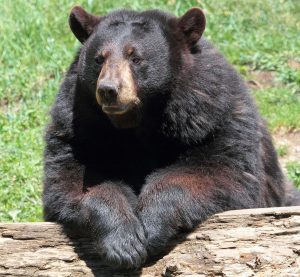
The biggest mystery in the park is the occasional sighting of a Bigfoot-type creature. Most sightings are probably bears, though. An estimated 1,500 American black bears live in the Smokies, and while some bears get used to hikers and tourists, most are shy and seldom seen. A black bear keeping an eye on hikers or cars will sometimes stand on its hind legs for a better view, and would naturally look like a hulking humanoid if glimpsed. But other sightings aren’t so easy to explain.
In February of 2009, a photographer named Deb Campbell was hiking the Middle Prong Trail in the snow. The Middle Prong Trail passes three major waterfalls and many smaller ones as it follows along a tributary of the Little River. She had the trail almost completely to herself—she says she only saw one person the whole time. Later she reported, “[A]t some point I am photographing along the stream and I start to smell a gawd awful stench. Not really like anything I had ever smelled before. I look around, see nothing, listen intently…nothing. So I finish up at that spot and go further up the trail.” The smell receded behind her but the snow increased, so finally she turned around to hike out. Around the area where she smelled the stink earlier, she started feeling watched. She stopped long enough to secure her camera gear for much faster hiking in slick conditions, when she heard a deep growl that she described as “very low, not like a cat, almost guttural.” Needless to say, she got off the mountain as quickly as possible.
The black bear doesn’t truly hibernate since its body temperature remains normal instead of dropping, but it does find a den in cold weather and will sleep for long stretches. It may emerge from its den occasionally during the winter during warm spells, but for the most part it’s asleep in its den from around November through March in the Smoky Mountains. But Campbell was hiking in February during a snowfall, with snow already on the ground. A bear would most likely not be out of its den in that weather unless it had been disturbed.
And bears don’t actually smell bad. During the winter hibernation most bears don’t defecate at all. Any feces left in a bear’s digestive tract harden to form a fecal plug. If it does feel the need to defecate near the end of the winter, it will do so just outside its den, but the fecal plug has very little odor. Even under ordinary conditions, unless a bear has been eating carrion, it will smell no worse than a dog that needs a bath.
Not only that, black bears don’t actually growl. They make grunty, huffing noises when warning people away or when males fight in the summer, and a frightened bear will moan, but they don’t growl like a dog.
It’s possible that Campbell hiked past a bear that had emerged from its den early and had found and eaten carrion, possibly roadkill, and that she was so close to the bear without seeing it that she smelled its breath. That’s almost more frightening than the thought of passing near a Bigfoot. The growl might have come from a different animal, a coyote or who knows, maybe even a red wolf. Or Campbell might have encountered a creature sometimes called a skunk ape due to its foul odor.
The skunk ape is most commonly reported in Florida swamps, but sightings—or smellings—have come from many other states. The smell is sometimes described as that of rotting food and roadkill on a hot day. A bear or other animal that has been rooting around in garbage bins can pick up this odor, especially in hot weather, but it’s hard to believe that a bear would be actively foraging so much in winter that it would smell like trash. January and February are the depths of winter in East Tennessee. The bears are hibernating, not foraging.
Thanks for your support, and thanks for listening! This is what a couple of fighting bears sound like:
[bear sounds]