Episode 502: Back to the Ocean

Show transcript:

Welcome to Strange Animals Podcast. I’m your host, Kate Shaw.

Life arose in the oceans and only much later spread to the land. But some land animals returned to the ocean and eventually became fully marine animals. That’s our topic this month, animals that returned to the sea.

Vertebrates that evolved on land are called tetrapods, meaning four-footed. It applies even to animals like birds that have two legs and two wings, and snakes that have no legs, because all the ancestors of tetrapods had four legs.

Returning to marine life as a tetrapod eventually results in an animal developing certain characteristics. Even animals like sea turtles become more streamlined, which helps the animal swim more easily, and arms and legs develop into flippers for the same reason. Sometimes limbs are lost completely, like the rear legs of cetaceans and sirenians, because they’re not needed. One interesting note is that as far as we know, all marine tetrapods still have to breathe air, which requires them to come to the surface of the water periodically.

The ancestors of marine tetrapods probably all started out as partially aquatic and gradually became more and more at home in the water. That’s true even for animals as well adapted to marine life as whales.

Some of the earliest whale ancestors were the ambulocetids, which probably looked sort of like a cross between a hippopotamus and a crocodile. Ambulocetid means “walking whale,” but there’s some evidence that it might have already evolved to be fully aquatic 49 million years ago. It had short legs that might not have been strong enough to support it out of water. It might have been covered with short fur like a seal but it might have had little to no fur, more like a hippopotamus. Either way, it had long toothy jaws, strong legs with webbed toes that it used to propel itself through the water, and a tail that probably resembled that of an otter. It grew about ten feet long, or 3 meters.

Ambulocetids lived in shallow coastal areas where the land was swampy, and it may have spent part of its time in fresh water. It wouldn’t have looked or acted much like a whale to us, but it was already developing features now found only in whales.

By around 41 million years ago, the basilosaurids and their close relations had evolved, and were definitely fully aquatic. Their nostrils had moved almost to the location of modern whales’ blowholes. Their forelegs were basically flippers with little fingers, their hind legs had almost disappeared, and they had tail flukes. They were also much bigger than their ancestors. Basilosaurus could grow up to 60 feet long, or 18 meters, and probably looked more like a gigantic eel than a modern whale. It was long and relatively thin, and may have mostly lived at the ocean’s surface instead of diving for food.

Dakosaurus wasn’t a dinosaur despite its name, although it lived at the same time as the dinosaurs, about 145 million years ago. It was a crocodylomorph that grew up to about 16 feet long, or 5 meters, and looked kind of like a shark with legs—but also a lot like a crocodile wearing a shark costume. Its tail had a fin near the end that made it resemble a shark’s tail, and its legs were flipper-like but still obviously legs. It had a whole lot of big serrated teeth in a deep skull with strong jaws. Because its jaws and teeth were so strong, in fact, scientists think Dakosaurus probably ate other marine reptiles instead of just fish.

While Dakosaurus was streamlined and well adapted to life in the ocean, we don’t know if it left the water to lay its eggs on land the way sea turtles still do or if it gave birth in the water. We don’t have any nest sites or young specimens one way or another.

Other marine reptiles definitely gave birth in the water, including ichthyosaurs. Ichthyosaurs and their close relations were incredibly successful, first appearing in the fossil record around 250 million years ago and last appearing around 90 million years ago. Most ichthyosaurs grew around 6 and a half to 11 feet long, or 2 to 3.3 meters, depending on species, so while they were pretty big animals, they weren’t enormous. They would have been fast, though, and looked a lot like fish or dolphins, with four flippers, a dorsal fin, a long tail with fins, and a long thin rostrum with lots of little teeth. We know they gave birth to live young because we have fossils of female ichthyosaurs who died in the process of giving birth, with the baby’s tail outside of its mother but the rest of it still in the birth canal. We have other fossils of ichthyosaurs with partially developed young in what would have been the mother’s uterus.

We also have lots of ichthyosaur coprolites that show us what it ate, since the coprolites fossilized with pieces of undigested food in them. This includes fish scales and squid beaks.

Of course, if you want to talk about big marine reptiles, you have to talk about mosasaurs. They lived in the late Cretaceous and went extinct at the same time as the non-avian dinosaurs. The earlier species of mosasaur are pretty small, but after ichthyosaurs went extinct, mosasaurs got really really big. Some estimates for the largest species range up to almost 50 feet long, or 15 meters, and maybe even longer. Mosasaurs looked kind of like streamlined iguanas, with four flippers, a shark-like tail, but a very lizard-like head. They probably ate other marine reptiles, including smaller species of mosasaur, along with sharks and other fish, dinosaurs that made the mistake of getting in the water, and sea turtles. Honestly, mosasaurs could eat whatever they could catch, and they could probably catch just about anything. Their jaws were double-hinged, which allowed them to swallow prey whole like snakes do.

We even have some skin impressions of mosasaurs that show smooth scales similar to those of snakes, and one study suggests that mosasaurs might have had forked tongues too. Mosasaurs were distantly related to snakes, but they were more closely related to monitor lizards that also have forked tongues.

Speaking of snakes, we’ll finish with an animal that people don’t usually remember when they think of animals that have returned to the ocean: sea snakes.

Not all sea snakes are fully marine. One genus spends part of its time on land and still lays eggs, but fully marine sea snakes give birth to live young. Researchers aren’t sure if the sea snakes that are fully marine were able to completely stop returning to the land because they already gave birth to live young or if that developed after the snakes started spending part of the time in the water.

The sea snake has a single lung, like most snakes, but unlike snakes that live on land this lung extends almost the length of the whole body (but not the tail). The snake’s nostrils are at the top of its snout so it can breathe without sticking too much of its head above water, and its extra-long lung can store lots of air so the snake doesn’t have to breathe too often. Some sea snakes can stay underwater for up to about two hours, partly because of the air stored in the lung, but also because they can absorb some oxygen from the water through their skin. Studies have shown that a sea snake can absorb almost 25% of the oxygen it needs through its skin.

Sea snakes are pretty big, with the largest growing up to 10 feet long, or 3 meters. Most are about half that length. They live in warm tropical oceans, usually in shallow water, and eat fish and other small animals. The sea snake’s body is slightly flattened side to side and its tail is much more flattened like a paddle, which is how it swims. In most cases, if a sea snake is washed ashore, it’s unable to crawl and is pretty much helpless. Terrestrial snakes have enlarged ventral scales that the snake can move up and down, allowing the edges of the scales to grab dirt or leaves or whatever the snake is moving over. This gives it a purchase, and as the scales move they push the body forward. Most sea snakes don’t have these specialized ventral scales and have regular smooth scales instead.

But while most sea snakes can’t move on land, if you see one stranded, don’t try to pick it up to help it. All sea snakes are extremely venomous. (Use a long paddle to push the sea snake back into the water, or better yet, call an expert who can safely return the snake to the water.) Most sea snakes are brightly colored as a result, to warn potential predators away. Many have stripes and are absolutely gorgeous.

Generally, if you encounter a sea snake while you’re swimming, the snake isn’t going to bite you. You’re too big for it to swallow and it doesn’t want to waste its venom on you. Don’t bother it and it won’t bother you unless it feels threatened. Just swim calmly away and be glad it’s not a mosasaur.

Thanks for your support, and thanks for listening!
Episode 378: Ichthyotitan

Thanks to Nathan-Andrew for suggesting giant ichthyosaurs!

Further reading:

Paleontologists unearth what may be the largest known marine reptile

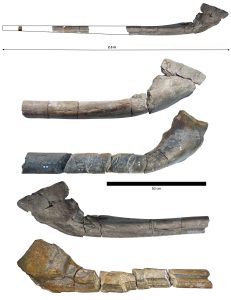
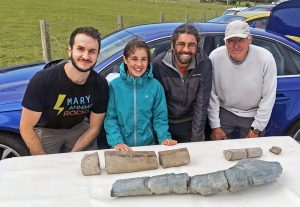
Ruby and some other scientists with the ichthyotitan fossils [photos taken from this page]:

How the pieces fit together:

Show transcript:

Welcome to Strange Animals Podcast. I’m your host, Kate Shaw.

This week we’re going to learn about some of the biggest animals that have ever swum through the oceans of this planet we call Earth, a suggestion from Nathan-Andrew.

We talked about ichthyosaurs way back in episode 63, but we haven’t really discussed these giant marine reptiles since. Ichthyosaurs and their close relations were incredibly successful, first appearing in the fossil record around 250 million years ago and last appearing around 90 million years ago. Most ichthyosaurs grew around 6 and a half to 11 feet long, or 2 to 3.3 meters, depending on species, so while they were pretty big animals, most of them weren’t enormous. They would have been fast, though, and looked a lot like fish or dolphins.

Even though ichthyosaurs were reptiles, they were warm-blooded, meaning they could regulate their body temperature internally without relying on outside sources of heat. They breathed air and gave birth to live babies the way dolphins and their relations do. They had front flippers and rear flippers along with a tail that resembled a shark’s except that the lower lobe was larger than the upper lobe. Some species had a dorsal fin too. They had huge eyes, which researchers think indicated they dived for prey. Not only were their eyes huge, they were protected by a bony eye ring that would help the eyes retain their shape even under deep-sea pressures.

We know a lot about what ichthyosaurs ate, both from coprolites, or fossilized poops, and from the fossilized remains of partially digested food preserved in the stomach area. Most ichthyosaurs ate cephalopods like squid and ammonites, along with fish, turtles, and pretty much any other animals they could catch. Ichthyosaurs also ate smaller ichthyosaurs.

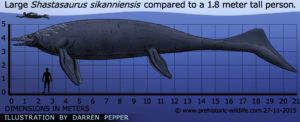
Nathan-Andrew specifically suggested we look at Shastasaurus and Shonisaurus, two closely related genera that belong to the ichthyosaur family Shastasauridae. Both genera contained species that were much larger than the average dolphin-sized ichthyosaur. The biggest species known until recently was Shonisaurus sikanniensis, which grew to almost 70 feet long, or 21 meters.

Scientists are divided as to whether S. sikanniensis should be considered a species of Shonisaurus or if it should be placed in the genus Shastasaurus. The main difference is that species in the genus Shastasaurus were more slender and had a longer, pointier rostrum than species in the genus Shonisaurus. Either way, S. sikanniensis was described in 2004 and at the time was the largest ichthyosaur species ever discovered.

But in May of 2016 a fossil enthusiast came across five pieces of what he suspected was an ichthyosaur bone along the coast of Somerset, England. He sent pictures to a couple of marine reptile experts, who verified that it was indeed part of an ichthyosaur’s lower jawbone, called a surangular. Studies of the fossil pieces compared it to S. sikanniensis, and it was similar enough that the new fossil was tentatively placed in the family Shastasauridae. Based on those comparisons, scientists estimated that this new ichthyosaur might have grown to around 72 feet long, or 22 meters, or even longer.

Almost exactly four years after the 2016 discovery, in May of 2020, an 11-year-old named Ruby Reynolds was looking for fossils with her father on the beach at Somerset. She discovered two big chunks of a fossil bone that she thought might be important. Ruby’s father contacted a local paleontologist, who in turn reached out to the man who had found and helped study the 2016 surangular bone. They studied the 2020 fossil and determined that it too was a surangular bone, and looked a lot like the one found in 2016. Not only was it better preserved and more complete, it was bigger.

Ruby and her father joined the team of paleontologists searching for more pieces of the surangular, and they actually found them. The pieces fit together like jigsaw puzzle pieces.

The bone has been dated as being about 202 million years old, from right before the end-Triassic extinction event and 13 million years after the other most recent ichthyosaur fossils from this era. It was described in early 2024 and named Ichthyotitan, and I’m happy to report that Ruby and her father helped with the research and are both included in the list of authors in the paper describing it. They also helped name it.

The estimated size of this specific Ichthyotitan specimen is about 25 meters, or 82 feet. That’s incredibly huge, rivaling the biggest whales alive today. But one other detail about this ichthyotitan bone is even more stunning. When the animal died, it was still growing. It hadn’t reached its full size yet.

As a comparison, the biggest animal ever known to have lived is the blue whale. A blue whale can grow up to 98 feet long, or 30 meters. Until now, scientists thought that no other animal had ever reached the size of a blue whale. Now, some paleontologists suspect that a full-grown ichthyotitan might have been at least as long or even longer than a blue whale.

The next step, of course, is to find more of the fossils. Ichthyotitan’s only fossils so far have been found in Somerset, England, but fossils of closely related ichthyosaurs have been found in parts of California, Nevada, British Columbia, China, Italy, Switzerland, and Tibet. In other words, they might be found just about anywhere with rocks dating to about 200 million years ago. The next time you’re out for a walk, keep a look-out just in case you spot a bone belonging to the biggest animal that ever lived.

You can find Strange Animals Podcast at strangeanimalspodcast.blubrry.net. That’s blueberry without any E’s. If you have questions, comments, or suggestions for future episodes, email us at strangeanimalspodcast@gmail.com. We also have a Patreon at patreon.com/strangeanimalspodcast if you’d like to support us for as little as one dollar a month and get monthly bonus episodes.

Thanks for listening!

Episode 063: The Hammerhead Worm and the Ichthyosaur

This week we’re learning about the hammerhead worm and the ichthyosaur, two animals that really could hardly be more different from each other. Thanks to Tania for the hammerhead worm suggestion! They are so beautifully disgusting!

Make sure to check out the podcast Animals to the Max this week (and always), for an interview with yours truly. Listen to me babble semi-coherently about cryptozoology and animals real and maybe not real!

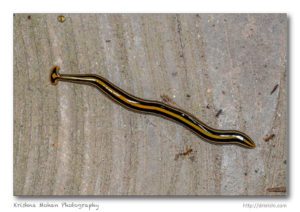
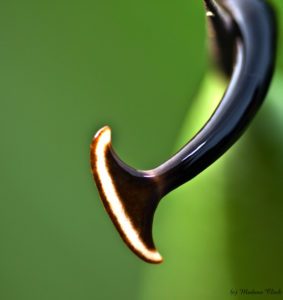
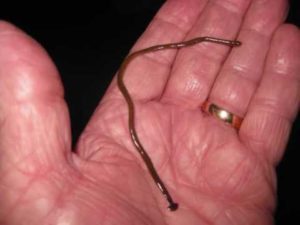
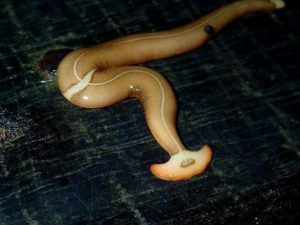
Here are hammerhead worms of various species. Feast your eyes on their majesty!

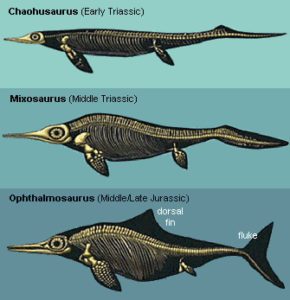
An ichthyosaur:

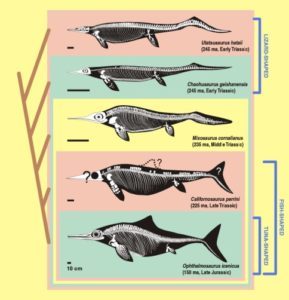
More ichthyosaurs. Just call me DJ Mixosaurus:

Show transcript:

Welcome to Strange Animals Podcast. I’m your host, Kate Shaw.

This week we’re looking at a couple of animals that have nothing in common. But first, a big thank you to the podcast Animals to the Max. The host, Corbin Maxey, interviewed me recently and the interview should be released the same day this episode goes live. If you don’t already subscribe to Animals to the Max, naturally I recommend it, and you can download the new episode and listen to me babble about cryptozoology, my favorite cryptids, and what animal I’d choose if I could bring back one extinct species. There’s a link to the podcast in the show notes, although it should be available through whatever app you use for podcast listening.

This week’s first topic is a suggestion from Tania, who suggested hammerheaded animals. We’ve covered hammerhead sharks before way back in episode 15, but Tania also suggested hammerhead worms. I’d never heard of that one before, so I looked it up. I’ve now been staring at pictures of hammerhead worms in utter fascination and horror for the last ten minutes, so let’s learn about them.

There are dozens of hammerhead worm species. They’re a type of planarian, our old friend from the regenerating animals episode, and like those freshwater planarians, many hammerhead worms show regenerative abilities. They’re sometimes called land planarians. Most are about the size of an average earthworm or big slug, with some being skinny like a worm while others are thicker, like a slug, but some species can grow a foot long or more. Unlike earthworms, and sort of like slugs, a hammerhead worm has a flattened belly called a creeping sole. Some hammerhead worms are brown, some are black, some have yellow spots, and some have stripes running the length of their bodies. Hmm, it seems like I’m forgetting a detail in their appearance. …oh yeah. Their hammerheads! Another name for the hammerhead worm is the broadhead planarian, because the head is flattened into a head plate that sticks out like a fan or a hammerhead depending on the species.

The hammerhead worm’s head contains a lot of sensory organs, especially chemical receptors and some eye-like spots that probably can only sense light and dark. Researchers think the worms’ heads are shaped like they are to help the worm triangulate on prey the same way many animals can figure out where another animal is just by listening. That’s why most animals’ ears are relatively far apart, too.

One species of hammerhead worm, Bipalium nobile, can grow over three feet long, or one meter, although it’s as thin as an earthworm. It has a fan-shaped head and is yellowish-brown with darker stripes. It’s found in Japan, although since it wasn’t known there until the late 1970s, researchers think it was introduced from somewhere else. That’s the case for many hammerhead worms, in fact. They’re easily spread in potted plants, and since they can reproduce asexually, all you need is one for a species to spread and become invasive.

While hammerhead worms do sometimes reproduce by mating, with all worms able to both fertilize other worms and also lay eggs, when they reproduce without a mate it works like this. Every couple of weeks a hammerhead worm will stick its tail end to the ground firmly. Then it moves the rest of its body forward. Its body splits at the tail, breaking off a small piece. The piece can move and acts just like a new worm, which it is. It takes about a week to ten days for the new worm to grow a head. Meanwhile, the original worm is just fine and is busy growing another tail piece that will soon split off again into another worm.

One common hammerhead worm accidentally introduced to North America from Asia is frequently called the landchovy. It’s slug-like, tan or yellowish, with a thin brown stripe and a small fan-shaped head. It looks like a leech and if I saw one I would assume that I was about to die. But I would be safe, because hammerhead worms only eat invertebrates, mostly earthworms but also snails, slugs, and some insects.

When a hammerhead worm attacks its prey, say an earthworm, it hangs on to it with secretions that act like a sort of glue. The earthworm can’t get away no matter what it does. The hammerhead worm’s mouth isn’t on its head. It’s about halfway down its body. Once it’s stuck securely to the earthworm, the hammerhead worm secretes powerful enzymes from its mouth that start to digest the earthworm. Which, I should add, is still alive, at least for a little while. The enzymes turn the worm into goo pretty quickly, which the hammerhead worm slurps up. The hammerhead worm’s mouth is also the same orifice that it expels waste from. I’m just going to leave that little factoid right there and walk away.

Hammerhead worms haven’t been studied a whole lot, but some recent studies have found a potent neurotoxin in a couple of species. That could explain why hammerhead worms don’t have very many predators. Or many friends.

[gator sound]

Our next animal is a little bit bigger than the hammerhead worm, but probably didn’t have a hammerhead. We don’t know for sure because we don’t have a complete skeleton, just a partial jawbone. It’s the giant ichthyosaur, and its discovery is new. In May of 2016 a fossil enthusiast named Paul de la Salle came across five pieces of what he suspected was an ichthyosaur bone along the coast of Somerset, England. He sent pictures to a couple of marine reptile experts, who verified that it was indeed part of an ichthyosaur’s lower jawbone, called a surangular. They got together with de la Salle to study the fossil pieces, and after doing size comparisons with the largest known ichthyosaur, determined that this new ichthyosaur probably grew to around 85 feet long, or 26 meters.

So what is an ichthyosaur? Ichthyosaur means fish-lizard, which is a pretty good name because they are reptiles that adapted so well to life in the ocean that they came to resemble modern fish and dolphins. This doesn’t mean they’re related to either—they’re not. But if you’ve heard the phrase convergent evolution, this is a prime example. Convergent evolution describes how totally unrelated animals living in similar habitats often eventually evolve to look similar due to similar environmental pressures.

The first ichthyosaurs appear in the fossil record around 250 million years ago, with the last ones dated to about 90 million years ago. In 1811, a twelve-year-old English girl named Mary Anning took her little brother Joseph to the nearby seashore to look for fossils they could sell to make a little money, and they discovered the first ichthyosaur skeleton. That sounds pretty neat, but Mary’s story is so much more interesting than that. First of all, when Mary Anning was barely more than a year old, a neighbor was holding her and standing under a tree with two other women, when the tree was struck by lightning. The three women all died, but Mary survived. She had been considered a sickly child before that, but after the lightning strike she was healthy and grew up strong.

Mary’s family was poor, so anything she and her brother could do to make money helped. At the time, no one quite understood what fossils were, but people liked them and a nice-looking ammonite or other fossilized shell could bring quite a bit of money when sold as a curio. Mary’s father was a carpenter, but the whole family was involved in collecting fossils from the nearby cliffs at Lyme Regis in Dorset, where they lived, and selling them to tourists. After her father died, selling fossils was the only way the family could make money.

As Mary and her brother became more proficient at finding and preparing fossils, geologists became more and more interested. She made detailed drawings and notes of the fossils she found, and read as many scientific papers as she could get her hands on. At the time, women weren’t considered scholars and certainly not scientists, but Mary taught herself so much about fossils and anatomy that she literally knew more about ichthyosaurs than anyone else in the world.

When Mary was 27 years old, she opened her own shop, called Anning’s Fossil Depot. Fossil collectors and geologists from all over the world visited the shop, including King Frederick Augustus II of Saxony, who bought an ichthyosaur skeleton from her. Collecting fossils could be dangerous, though. In 1833 she almost died in a landslide. Her little dog Trey was just in front of her, and he was killed by the falling rocks. Probably Trey had not heard about the lightning incident or he wouldn’t have stuck so close to Mary.

Although Mary Anning was an expert, and every collection and museum in Europe contained fossil specimens she had found and prepared, she got almost no credit for her work. She was not happy about this, either. Her discoveries were claimed by others, just because they were men. Mary was the one who figured out that the common conical fossils known as bezoar stones were fossilized ichthyosaur poops, called coproliths. Her expertise wasn’t just with ichthyosaurs, either. She was also an expert on fossil sharks and fishes, pterosaurs, and plesiosaurs, and she discovered ink sacs in belemnite fossils. Her friends Anna Pinney and Elizabeth Philpot frequently accompanied Mary on collecting expeditions. I picture them frowning and kicking scientific butt.

Okay, back to ichthyosaurs. Ichthyosaurs were warm-blooded, meaning they could regulate their body temperature internally, without relying on outside sources of heat. They breathed air and gave birth to live babies the way dolphins and their relations do. They had front flippers and rear flippers along with a tail that resembled a shark’s except that the lower lobe was larger than the upper lobe. Some species had a dorsal fin too. They had huge eyes, which researchers think indicated they dived for prey. Many ichthyosaur bones show damage caused by decompression sickness, when an animal surfaces too quickly from a deep dive—called the bends by human scuba divers. Not only were their eyes huge, they were protected by a bony eye ring that would help the eyes retain their shape even under deep-sea pressures.

Ichthyosaurs had long jaws full of teeth, but different species ate different things. Many ate fish and cephalopods like squids, while other specialized in shellfish, and others ate larger animals. We have a good idea of what they ate because we have a lot of high quality fossils, so high quality that we can see the contents of the animals’ stomachs. We also have all those coproliths that paleontologists cut open to see what ichthyosaur poop contained.

Ichthyosaurs lived before plesiosaurs and weren’t related to them. Plesiosaurs are usually depicted with long skinny necks, but more recent reconstructions suggest their necks were actually thick, protected by muscles and fat. Ichthyosaurs appear to have been outcompeted by plesiosaurs once they began to evolve, but ichthyosaurs were already on the decline at that point, although we don’t know why.

Until very recently, the biggest known species of ichthyosaur was Shonisaurus sikanniensis, which grew to almost 70 feet long, or 21 meters. It was discovered by Elizabeth Nicholls, continuing Mary Anning’s legacy of kicking butt and finding ichthyosaurs, and described in 2004. But the new ichthyosaur just discovered was even bigger.

In the mid-19th century, some fragments of fossilized bones were found near the village of Aust in England. They were assumed to be dinosaur bones, but now researchers think they may have been from giant ichthyosaurs, maybe even ones bigger than the one whose jawbone was recently found.

As a comparison, the biggest animal ever known to have lived is the blue whale. It’s alive today. Every time I think about that, it blows my mind. A blue whale can grow almost 100 feet long, or 30 meters. Until very recently, researchers didn’t think any animal had ever approached its size. Even megalodon, the biggest shark known, topped out at about 60 feet, or 18 meters. If the estimated size of the giant ichthyosaur, 85 feet or 26 meters, is correct, it’s possible there were individuals that were bigger than the biggest blue whale, or it’s possible that the jawbone we have of the giant ichthyosaur was actually from an individual that was on the small side of average. Let’s hope we find more fossils soon so we can learn more about it.

Mary Anning would have been out there looking for more of its fossils, I know that.

You can find Strange Animals Podcast online at strangeanimalspodcast.com. We’re on Twitter at strangebeasties and have a facebook page at facebook.com/strangeanimalspodcast. If you have questions, comments, or suggestions for future episodes, email us at strangeanimalspodcast@gmail.com. If you like the podcast and want to help us out, leave us a rating and review on Apple Podcasts or whatever platform you listen on. We also have a Patreon if you’d like to support us that way.

Thanks for listening!