Episode 504: The Mystery Roar

Further reading:

Wolves on rise in France as bears wreak mountain havoc

Can Brown Bears Survive in the Pyrenees?

Show transcript:

Welcome to Strange Animals Podcast. I’m your host, Kate Shaw.

On the evening of August 4, 2019, two hikers set up camp in the Pyrenees Mountains. Laurent and Frédéric were familiar with the area and had plenty of experience hiking and camping. Once their camp was ready for the night, they took off their boots and socks and sat down to eat dinner and relax at a small campfire. If you’ve ever camped after a long hike, you’ll know that this is the best time of the day, when you can rest and air out your boots.

After only a few minutes, though, the two heard grunts and growls in the darkness not far from their camp. They were concerned, but they had a fire and most animals won’t approach a fire. But the sounds got closer and closer.

Then the animal roared—and it sounded like it was much closer than before. Laurent and Frédéric remembered that bears have become more common in the Pyrenees in the last few decades, and rather than take their chances with a hungry bear, they decided it was time to go. They shoved their bare feet into their boots, left everything behind, and raced back down the trail.

It was late when they made it to the village of Germ so the hikers took refuge in a church where they spent the night. In the morning they hiked back up to their campsite to retrieve their belongings, expecting it to be trashed by a bear hunting for food. But everything was where they’d left it.

Some people assumed the hikers had panicked over nothing, but the men were adamant that they’d heard something roaring as it came closer. In a news interview they said the final roar, the one that made them grab their boots and run, lasted several seconds and was so loud they could actually feel it in their chests.

Brown bears were once fairly common in the Pyrenees but by 1991 they had all been killed, mostly by hunters. Habitat loss was also a factor as people built more roads and houses in the mountains. In 1995 a conservation program brought three bears from Slovenia to start a reintroduction program, and the way people acted, you’d think someone had released a thousand rabid weasels into their homes.

Sheep and cattle farmers, and people who think the wilderness belongs to humans and humans only, protested the reintroduction of the bears, and one of the bears was shot and killed. This is despite the fact that farmers whose livestock are killed by bears get paid a lot of money by the French government. Approximately 1,000 sheep a year are killed in the Pyrenees—not by bears, but by pet dogs running loose.

Conservation efforts continued despite protests and finally, by 2020, there were 64 bears living in the Pyrenees Mountains. The number may be a little larger—some estimates are as high as 100—but conservationists have difficulty counting the bears properly because protesters threaten them and in one case actually set a conservationist’s car on fire.

The Pyrenees mountain range more or less divides France from Spain. It’s older than the Alps and especially known for its spectacular waterfalls. Many plants and animals that live in the Pyrenees are found nowhere else in the world, but unfortunately hunting and habitat loss have driven many of them to extinction. The Pyrenean ibex, a type of wild goat, went extinct in the year 2000.

Conservationists have introduced a related animal, the western Spanish ibex, to help keep the mountain ecosystems healthy. The bears now living in the mountains are similarly important to the ecosystems. Conservationists are frustrated by protesters who don’t want bears in the mountains at all, especially considering that the Great Pyrenees dog was developed in the area to protect livestock from bears and other predators. Some shepherds in British Columbia, Canada, where both black bears and grizzlies live, successfully use Great Pyrenees dogs to guard their flocks from bears. Grizzlies are a subspecies of brown bear.

But let’s go back to Laurent and Frédéric’s scary camping trip. Did they really encounter a bear or could it be something else?

Bears are generally quite shy animals who avoid people when they can. Unlike black bears, which don’t growl, brown bears do make growling and grunting sounds occasionally. Males will growl or even roar at other males during mating season in spring and early summer, signaling aggression and the willingness to fight. A brown bear will sometimes growl or roar at a person to warn them away too. So it’s possible the hikers heard a bear who wasn’t interested in their food but just wanted them out of its territory.

There’s another possibility, though, and it’s an animal that’s much more common in the Pyrenees Mountains than bears are. The wild boar lives throughout the Pyrenees, especially in forested areas and meadows. It’s mostly nocturnal and is usually shy of humans, and its numbers have increased considerably since its main predator, the wolf, was driven to extinction in the mountains and elsewhere in the 1930s.

An estimated two million wild boars live in France, including the Pyrenees. The most common time for people to encounter wild boars is at dusk, which is exactly when the hikers heard the growling. But wild boars are just pigs, right? Pigs oink, right?

This is what an aggressive wild boar sounds like:

[boar growl]

A boar will growl to warn other boars that there’s danger nearby and to signal aggression. That would explain why the hikers heard grunts and growls, which finished in a loud, angry roar. It would also explain why the campsite was undisturbed. Wild boars mostly eat plants, including roots, nuts, and fruit, although they’ll also eat carrion and the occasional small animal if they can catch it. Unlike a bear, which almost always wants to eat people food when it can, a wild boar is a lot less interested in people food. If the hikers did hear a boar instead of a bear, once they ran away the boar was probably satisfied and just went around finding its natural food in the area as usual.

Wild boars have been introduced to parts of North and South America, Australia, and other places where they’ve become an invasive species. The wild boar is native to Europe and Asia, though, so the ones in the Pyrenees are right where they belong. The only real issue is the lack of natural predators to keep the boar population at a healthy level.

The good news is that wild boars aren’t usually as aggressive as they can sound, as long as they’re not cornered. The two hikers were probably not in any danger after all. Still, it’s better to be safe than sorry when you get roared at by a large creature in the dark.

Thanks for your support and thanks for listening!
Episode 399: Bears

Thanks to Anbo, Murilo, Clay, and Ezra for their suggestions this week! Let’s learn about some bears!

Further reading:

Snack attack: Bears munch on ants and help plants grow

Extinct vegetarian cave bear diet mystery unravelled

Ancient brown bear genomes sheds light on Ice Age losses and survival

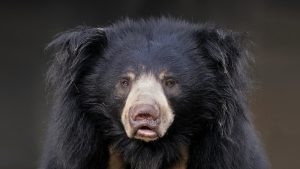
The sloth bear has shaggy ears and floppy lips [photo from this site]:

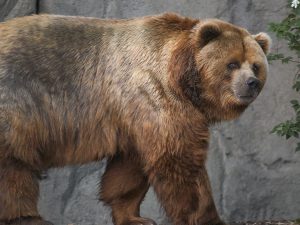
An absolute unit of a Kodiak bear in captivity [photo by S. Taheri – zoo, own work, CC BY-SA 3.0, https://commons.wikimedia.org/w/index.php?curid=1118252]:

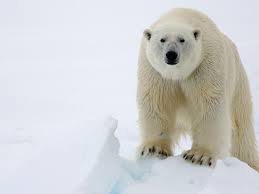
A polar bear:

Show transcript:

Welcome to Strange Animals Podcast. I’m your host, Kate Shaw.

This week we’re revisiting a popular topic, bears! We’ll talk about some bears we’ve never covered before, with suggestions from Anbo, Clay, Ezra, and Murilo. We’ll even discuss a small bear mystery which has mostly been solved by science.

To start us off, Anbo wanted to learn about bears in general. We’ve had bear episodes before, but our last episode all about bears was way back in 2017, in episode 42. Some of our listeners weren’t even born back then, which makes me feel super old.

Bears live throughout much of the world today, but they evolved in North America around 38 million years ago. These ancestral bears were small, about the size of a raccoon, but they were successful. They spread into Asia via the land bridge Beringia, where they were even more successful than in North America, so successful that by around 30 million years ago, descendants of those earliest bear ancestors migrated from Asia back into North America. But it wasn’t until the Pleistocene around 2 ½ million years ago that bears really came into their own.

That’s because bears are megafauna, and megafauna evolved mainly as an adaptation to increasingly cold climates. As the ice ages advanced, a lot of animals grew larger so they could stay warm more easily. Predators also had to grow larger as their prey became larger, since if you want to hunt an animal the size of a bison or woolly rhinoceros, you’d better be pretty big and strong yourself.

Bears mostly weren’t hunting animals that big, though. Modern studies suggest that overall, bears are omnivores, not fully carnivorous. Bears eat a lot of plant material even if you don’t count the panda, which isn’t very closely related to other bears. Even when a bear does eat other animals, they’re not usually very big ones.

Let’s take Murilo’s suggestion as an example, the sloth bear. The sloth bear lives in India and is increasingly vulnerable due to habitat loss and poaching. It’s probably most closely related to the sun bear that we talked about in episode 234, which also lives in parts of South Asia. Both the sun bear and the sloth bear have long black hair and a white or yellowish V-shaped marking on the chest. The sloth bear’s hair is especially long on its neck and shoulders, like a mane, and its ears even have long hair.

The sloth bear stands around 3 feet high at the shoulder at most, or 91 cm, and a big male can be over 6 feet tall, or almost 2 meters, when he stands on his hind legs. This isn’t gigantic for bears in general, but it’s not small either. Scientists think the V-shaped marking on its chest warns tigers to leave the sloth bear alone, and tigers mostly do. If tigers think twice about attacking an animal, you know that animal has to be pretty tough.

The sloth bear has massive claws on big paws. The claws can measure 4 inches long, or 10 cm, although they’re not very sharp. The bear has an especially long muzzle but its teeth aren’t very large. Like most bears, it’s good at climbing trees and can run quite fast, and it swims well too. It even has webbed toes.

With all this in mind, what do you think the sloth bear eats? I’ll give you some more hints. It has loose, kind of flappy lips, especially the lower lip. It doesn’t have any teeth in the front of its upper jaw. It mainly uses its huge claws to dig.

If you guessed that the sloth bear eats ants, termites, and other insects, you are right! It digs into termite and ant nests and uses its long, flexible lips to slurp up as many insects as it can, giving them a quick crunch with its back teeth before swallowing them down.

Insects are actually quite nutritious, and the sloth bear isn’t the only bear that eats them. All bears snack on ants and other insects sometimes. You may have heard that bears love honey and will tear open beehives to get it, and while that’s true, the bear is mainly after the larval bees because they’re so nutritious. The honey is just, you know, dessert.

Next, Clay wanted to learn about the Kodiak bear, which may be the largest bear in the world. It’s a subspecies of brown bear and is sometimes called the Alaskan brown bear since it lives on some Alaskan islands called the Kodiak Archipelago. It’s light brown or rusty-red in color.

The Kodiak bear has been restricted to these islands for at least 10,000 years, since the end of the Pleistocene when the sea levels rose as glaciers melted. It demonstrates island gigantism, which is actually quite unusual. Because islands have limited resources, but are relatively protected from large numbers of predators, small animals are the ones that generally adapt to island life by growing larger. Animals that start off large generally adapt by growing smaller, called island dwarfism. That’s why some islands have been home to dwarf elephants but giant rodents.

In the case of the Kodiak bear, it has a source of protein that helps it grow so incredibly large, salmon. Five species of salmon spawn in the freshwater on the islands, and the bears are able to put on lots of weight to survive the harsh winter by eating as much salmon as they can catch. They also have lots of nutritious plants to eat. They actually prefer some plants to eating salmon, which makes sense when you think about it. A wild animal needs to conserve energy, and it can take a lot of energy to catch fish. It’s a lot easier to eat berries, which can’t swim away.

So how big can a Kodiak bear get? A big male can stand up to 10 feet tall on his hind legs, or 3 meters, and be 5 feet tall, or 1.5 meters, when standing on all fours. Bears kept in captivity can grow even larger. That’s much bigger than a grizzly and about the same size as the closely related polar bear, which brings us to Ezra’s suggestion.

Ezra wanted to learn about the polar bear, which lives in the Arctic and areas near the Arctic. It doesn’t live near the Antarctic, or south pole, which means polar bears don’t eat penguins, because penguins live around the Antarctic. The polar bear does eat a whole lot of other animals, though, and is the most carnivorous of all bears. It especially likes eating seals, and will also catch and kill walruses, caribou, and beluga whales. That’s right, the polar bear can actually kill an entire whale. The beluga is fairly small for a whale and relies on breathing holes in the ice, and sometimes when it comes up to breathe, there’s a polar bear waiting for it. Most of the time, though, the polar bear eats much smaller animals.

The polar bear spends a lot of its time on sea ice, and a lot of the time in the sea. It swims incredibly well and spends so much time in the water that some people consider it a marine animal. It’s certainly semi-aquatic. Its kidneys are adapted to filter excess salt out of its blood from seawater, and its small eyes are closer to the top of its head than in other bears. This helps it see above water while swimming.

The polar bear is closely related to the brown bear and will sometimes interbreed with the brown bear where their ranges overlap. The resulting hybrid bear is usually light brown in color. The polar bear is famously white, although its fur becomes yellowish as the year goes on. It sheds its winter coat in the spring and the new hair that grows in is white.

Actually, the polar bear’s fur is transparent, but it looks white because of the way it scatters light. The guard hairs are long and coarse, protecting a shorter, softer undercoat that helps keep the bear warm even on bitterly cold nights. Unlike other bears, the polar bear doesn’t hibernate, except for pregnant females.

There used to be a bear of similar size that lived in Europe and Asia during the Pleistocene and only went extinct about 24,000 years ago. The cave bear gets its name because so many of its remains have been found in caves. It may have hibernated in caves like some bears do today, or it might have used caves as shelters year-round.

Scientists think the cave bear was most closely related to brown bears and polar bears. The males were much larger than females, and a big male was as big as a Kodiak or polar bear. But this giant bear probably wasn’t too much of a problem for our ancient ancestors and Neandertal relations, because it was almost entirely vegetarian.

Scientists have studied the wear pattern on cave bear teeth and determined that it was eating a whole lot of fruit, especially berries. It probably did eat at least some meat, but it’s likely that most of it came from scavenged carcasses. The cave bear didn’t even have all the teeth that other bears have.

All this talk about huge bears brings us to a mystery. It may even be a mystery you were wondering about yourself. How did bears survive the end of the Pleistocene when so many other megafauna went extinct, from the mammoth and giant ground sloth to the dire wolf and sabertooth cat?

A team of scientists from Denmark and Japan decided to examine the genetics of ancient brown bears, to learn how individuals were related and therefore how bears migrated across the world over time. They extracted genetic material from the remains of bears that lived as much as 60,000 years ago and as recently as 3,800 years ago and compared them to each other and to bears alive today.

Scientists already knew that brown bears used to live in more parts of the world than they do today. The prevailing view was that as the climate warmed after the ice ages, the bears retreated into colder parts of the world where they were more comfortable. But the team learned something surprising from the study, which was published in January of 2024.

Brown bears that lived before the end of the Pleistocene, approximately 11,000 years ago, had much broader genetic diversity than the bears that lived more recently. That means that bears that lived as far south as Japan and Ireland during the Pleistocene didn’t move to colder parts of the world, they died out. Each population that went regionally extinct made the brown bear gene pool that much smaller.

Most likely it was a combination of luck and adaptability that allowed bears to survive the end-Pleistocene extinctions. Just think how sad it would be if I ended this episode by saying that bears went extinct 11,000 years ago. Instead, we can still go to the zoo and see all kinds of bears whenever we want to.

You can find Strange Animals Podcast at strangeanimalspodcast.blubrry.net. That’s blueberry without any E’s. If you have questions, comments, or suggestions for future episodes, email us at strangeanimalspodcast@gmail.com. We also have a Patreon at patreon.com/strangeanimalspodcast if you’d like to support us for as little as one dollar a month and get monthly bonus episodes.

Thanks for listening!