Episode 035: The Yeti (Bigfoot part 1)

It’s October, MONSTER MONTH! We’re starting it off right with an episode about the Yeti! I literally could have made this episode an hour long without even touching on half the information out there, but no one wants to listen to me talk for that long. If you’re intrigued and want to hear more about our big furry friend from the Himalayas, check out the fine podcasts listed below.

The Himalayas, in map form:

A Himalayan brown bear (tongue blep alert!):

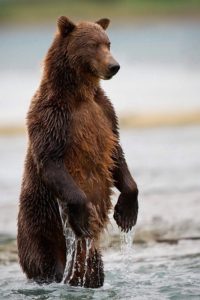
A bear standing up (this is a brown bear from Alaska but I like the picture. Bears stand up a lot):
Recommended listening:

Museum of Natural Mystery – episode 14: “Backtracking with Bigfoot” – highly recommended for information about North American bigfoot/Sasquatch lore and history. It’s family friendly and not very long. I heart it.

MonsterTalk – episode 116 “Yetipalooza” – lots of Yeti information and some terrible, terrible puns

Strange Matters Podcast – “Legendary Humanoid Creatures” – a good overview of a lot of different bigfoot type monsters, including the Yeti

Hidden Creatures Podcast – Episode Six A “Yearning for the Yeti’s Discovery” and Episode Six B “The Yeti…Again” – lots of info on the Yeti

All of the above should be family friendly, with possible mild language.

Resources/further reading:

The Historical Bigfoot by Chad Arment

Abominable Science! by Daniel Loxton and Donald R. Prothero

Hunting Monsters by Darren Naish

Show transcript:

Welcome to Strange Animals Podcast. I’m your host, Kate Shaw.

It’s October and that means monsters. Let’s jump right in with one of the biggest stars of cryptozoology, bigfoot!

As part of my research for this episode, I listened to other podcasts that have covered bigfoot and his kin. One of those was the Museum of Natural Mystery’s episode 14, Backtracking with Bigfoot. I was more than a little dismayed when I listened to that one, because it’s exactly what I had hoped to do with this episode. In fact, while Museum of Natural Mystery covers other topics than just animals, when they do focus on animals they scratch the same itch I created Strange Animals podcast to scratch. If I’d discovered them earlier, the podcast you’re listening to now would probably be about music or something, not animals.

There’s a link to Backtracking with Bigfoot in the show notes and I highly recommend you go listen to it. It focuses mainly on the Bigfoot phenomenon in North America, from Sasquatch to skunk apes. Rather than cover the same ground, my focus here is going to be on bigfoot legends from other parts of the world. There’s so much fascinating information out there that I had to break the episode into two parts. This week we’re looking at the yeti.

But first, some background. There are a couple of starting places for the modern concept of bigfoot. In 1921, the Everest Reconnaissance Expedition found tracks in the snow resembling a bare human foot. They realized the tracks were probably made by wolves, the front and rear tracks overlapping and the snow melted enough to obscure the paw pads. Expedition leader Charles Howard-Bury wrote that the expedition’s Sherpa guides claimed the tracks were made by a wild hairy man.

At about the same time, the 1920s, British Columbian schoolteacher John W. Burns was collecting reports of Native encounters with giant wild people. He coined the term Sasquatch by anglicizing a couple of different words from several different Native dialects.

Burns published his stories in magazines. Howard-Bury talked to reporters about his Everest expedition. The idea of bigfoot took shape and took off in the public imagination. It merged with giant apes and ape-men in popular culture, like King Kong in 1933 and the movie Tarzan the Ape Man in 1932, both of which were huge hits.

Before this, from the early 19th century to around the 1940s, newspaper reports that would today be called bigfoot sightings were attributed to wild men or occasionally to escaped gorillas or other apes. Some were hoaxes, some seem to concern real humans living outside of society, and some are probably misidentifications of bears and other real animals. Very few suggest the wild man in question was a creature unknown to science. This doesn’t mean there aren’t any legit sightings of an actual bigfoot mixed in, just that bigfoot wasn’t yet a common concept.

But by 1967, year of the famous Patterson-Gimlin film, the notion of bigfoot as a huge, hairy, upright ape was firmly planted in western culture. Most of us know a fair amount about North American Sasquatches just from popular culture. ‘Squatch-hunters on TV stumble around in the woods at night, which by the way I never understood since apes are not nocturnal. Bigfoot appears in TV commercials, movies, and is the subject of documentaries that are all pretty much identical. But most of us are less familiar with the Yeti.

The English-speaking world first learned about the Yeti after a 1921 expedition to Mount Everest. As I mentioned a few minutes ago, the expedition members recognized that a line of huge human-like prints they spotted in the snow above 20,000 feet probably belonged to wolves or some other four-legged animal. The forepaw and hind paw prints overlapped, making a double track of what looked like long, relatively narrow footprints. Then the snow partially melted, obscuring the details and enlarging the prints. Colonel Howard-Bury, the expedition leader, was very clear about this in the London Times in October 1921, and dismissed as superstition the Sherpas’ statement that the tracks belonged to a hairy wild man.

Maybe all that was true, but if you’re a journalist hoping to sell papers, which story are you going to run with? After the expedition returned to India, journalist Henry Newman interviewed the porters and published a sensational account of their stories. He translated their name for the wild man, Metoh kangmi, as “abominable snowman.” Maybe you’ve heard of it.

As it turns out, Metoh kangmi means something closer to man-bear. In fact, it means man-bear, man-bear, because both mi-te and kangmi mean the same thing.

The peoples who live in and around the Himalayas speak a lot of different languages. They also have a lot of different names for what we call the Yeti. Yeti is a corruption of a Sherpa term, yeh-teh, meaning “animal of rocky places,” although it may be related to the term meh-teh, which means man-bear. Other terms translate to wild man, cattle bear, brown bear, and white bear. I’m going to refer to all these creatures as the Yeti for convenience sake.

While the pop culture version of the Yeti is a white bigfoot striding through the snow, actual sightings of Yetis are of brown, black, or even reddish creatures. Local Yeti lore throughout the Himalayas doesn’t describe a specifically upright apeman or even a particularly human-like monster, either. To locals, yetis are fairly amorphous, and when they are described, they tend to have bear-like or even big-cat-like characteristics.

As an example, here’s a quote from one of the earliest Yeti reports, from 1889. I’m taking the quote from the book Abominable Science by Daniel Loxton and Donald Prothero. Links to all the books I used in my research are in the show notes, of course. Anyway, the quote itself comes from a book called Among the Himalayas by Laurence A. Waddell:

“Some large footprints in the snow led across our track, and away up to higher peaks. These are alleged to be the trail of the hairy wild men who are believed to live amongst the eternal snows, along with the mythical white lions, whose roar is reputed to be heard during storms. The belief in these creatures is universal among Tibetans. None, however, of the many Tibetans I have interrogated on this subject could ever give me an authentic case. On the most superficial investigation it always resolved itself into something that somebody heard tell of.”

Waddell goes on to declare that the wild man was nothing more than a bear, then says that the people of the area are just superstitious ignoramuses.

I dislike that most descriptions and discussions about Yetis are filtered through European experiences, and that the older reports especially have a high-handed tone that ruffles my feathers—not just racist, but classist as well. Brown people and poor people are not stupid, and what someone from one culture dismisses as a superstition may be a deeply held religious belief in another culture. Moreover, as anthropologist John Napier wrote in 1973, the superstitious sherpas that white explorers sneer at may actually have been having a sly joke at their employers’ expense—that or they’re just being polite and telling their employers what they think they want to hear. Or both, heck. People are complicated.

But consider what has happened when Europeans eager to discover the “truth” of the Yeti encounter Buddhist monks with Yeti relics. In 1959 Tom Slick, a rich Texas oilman who liked to indulge his hobby of bigfoot hunting—we met him in the giant salamander episode, you may remember—funded an expedition to Nepal to hunt for the Yeti. This was his fourth Yeti hunt, and some historians suspect he and many other explorers in the area had CIA connections. This was during the cold war, remember. But Slick’s interest in the Yeti was genuine, and during his 1958 expedition he had tried to buy a mummified Yeti hand from a Buddhist monastery in Pangboche, Nepal. The hand, along with a Yeti scalp, was a sacred relic and definitely not for sale. So in 1959 Slick arranged for explorer Peter Byrne to go back to the monastery and steal a finger from the hand. Supposedly Byrne replaced the missing finger with a human finger he had brought with him. Where on earth do you even get a human finger? Anyway, as Byrne reports, to get the finger out of Nepal he gave it to the actor Jimmy Stewart, who was one of the expedition’s backers. Stewart’s wife Gloria smuggled the Yeti finger out of the country in her lingerie case. It was later analyzed and found to be a human finger.

Everything about this story is horrible. First of all, it is not cool to steal sacred relics. Second, it’s not cool to swap out human body parts to cover your theft. And third, you know what they did with the stolen Yeti finger that turned out to be human? They lost it, that’s what they did. For decades no one knew where it had gone. Fortunately, it was rediscovered in a London museum in 2008, and DNA analysis confirmed it was human. The BBC interviewed Byrne in 2011 and his story had changed somewhat about his acquisition of the finger. He now says he paid the monastery for it. Mmhm. Sure. Someone stole the rest of the hand from the monastery in the 1990s, along with a yeti skull-cap.

Other Yeti remains have been analyzed more ethically. Sir Edmund Hillary, the guy who first summited Everest, and zoologist Marlon Perkins mounted an expedition in 1960 through ‘61, and went back to the Pangboche monastery to examine their relics. But this time, no one stole anything. In fact, the expedition paid for some repairs to the monastery, and paid for a village elder to accompany a Yeti scalp they were allowed to borrow, which they sent to be analyzed. They also raised money to construct schools and medical clinics in remote villages, among other good works.

The Yeti scalp, and others like it, turned out to be made from the shoulder skin of a goat-like wild animal called a serow. In fact, the Hillary-Perkins expedition was able to make its own Yeti scalps with serow skins dried over a conical wooden mold. It sent its homemade scalps with the borrowed scalp for analysis without telling the lab that some were not authentic. The results came back that all the scalps were made from the same type of animal skin.

In 1986 mountaineer Reinhold Messner had a terrifying encounter with an unknown animal. I’m going to quote it at length because it’s pretty awesome. It’s from his book My Quest for the Yeti, but I have taken the quote again from Abominable Science.

“Making my way through some ash-colored juniper bushes, I suddenly heard an eerie sound—a whistling noise, similar to the warning call mountain goats make. Out of the corner of my eye I saw the outline of an upright figure dart between the trees to the edge of the clearing, where low-growing thickets covered the steep slope. The figure hurried on, silent and hunched forward, disappearing behind a tree only to reappear again against the moonlight. It stopped for a moment and turned to look at me. Again I heard the whistle, more of an angry hiss, and for a heartbeat I saw eyes and teeth. The creature towered menacingly, its face a gray shadow, its body a black outline. Covered with hair, it stood upright on two short legs and had powerful arms that hung down almost to its knees. I guessed it to be over seven feet tall. Its body looked much heavier than that of a man of that size, but it moved with such agility and power toward the edge of the escarpment that I was both startled and relieved. Most I was stunned. No human would have been able to run like that in the middle of the night. It stopped again beyond the trees by the low-growing thickets, as if to catch its breath, and stood motionless in the moonlit night without looking back.”

Messner finishes the sighting by saying it rushed up the slope out of sight on all fours. Messner fled to the nearest village.

After that he spent the next ten years searching for more information on the Yeti. He examined Yeti remains in various monasteries and in all cases found they were either taxidermied creations made from various known animals, or the pelts of bears. In 1997 in the peaks of the Nanga Partains, he and his guide Rozi Ali saw what the locals called a dremo. That’s a Tibetan word commonly used for both the yeti and the Himalayan brown bear. Here’s his description:

“One afternoon, after a long trek, we encountered another dremo. He fled when he saw us, but then seemed to stop and rest in a hollow. I approached the spot from behind some ridges so that he wouldn’t pick up my scent. Rozi Ali followed me. When I began to climb down to where the animal was sleeping in the grass, Rozi Ali tried to stop me. I broke free from his grasp and came within twenty yards of the animal, where I took some good pictures. Rozi Ali, crouching some way back, begged me to make a run for it. He was sweating with fear.

“The animal woke up and looked at me in the way a startled child would a stranger. It was a young brown bear.”

He also says they saw another dremo later, while in Kashmir, and it was “running away on two legs. From a distance it looked uncannily like a wild man”. But it too was a brown bear.

Messner concluded, not unreasonably, that the Yeti was a bear. Many others agree. As it happens, I agree too, and I wonder if a bear that walks upright like a person is perhaps considered to have supernatural traits. After all, Messner found it eerie even when he knew what he was seeing. That might explain the overlap between terms for yeti and terms for bears, and would also explain why so many words translated as yeti actually mean man-bear. But I’d be delighted if a strange upright animal lives in the remote parts of the world, even if that strange animal just turns out to be a new species of bear.

In 2014, geneticists from Oxford University analyzed hair samples from a Himalayan bear and determined that the DNA was similar to that of a 40,000 year old polar bear. But a new analysis in 2015 by geneticists from the Smithsonian and the University of Kansas was a lot less exciting, determining that the hair belonged to a native brown bear after all—but probably to a rare, endangered subspecies of brown bear that lives in parts of the Himalayas, sometimes called the Tibetan blue bear. It’s not blue, by the way. It’s brown. I don’t know why it’s called a blue bear.

The Himalayan brown bear usually lives above the timber line in the mountains and like other bears is omnivorous. That means it eats both plants and meat. It especially likes to eat marmots, a chubby rodent related to squirrels that looks a lot like a prairie dog.

Many cryptozoologists think the Yeti and other bigfoot-type creatures must be either an unknown offshoot of the human family, like a Neandertal, or another unknown great ape that has developed an upright stance, such as a descendant of Gigantopithecus. They even propose that different types of bigfoots are different species of upright ape, all unknown to science.

I do think there are a lot of unknown animals out there, but I’m definitely skeptical that somehow we’ve overlooked multiple living species of giant apes, and not only that, that we haven’t even found fossil or subfossil remains of any of them. Gigantopithecus, by the way, is RIGHT out as a possibility. It was huge, sure, and an ape, sure, but it disappeared from the fossil record 300,000 years ago and ate mostly bamboo. Some researchers think it died out due to competition with pandas, in fact. It was related to orangutans and probably looked more like a big gorilla than a human, and would not stand upright. Remember that among all mammals, humans are the only ones who have developed true bipedalism, and we’ve sacrificed a lot in exchange. For instance, we have weak backs, childbirth is much more difficult, and we frequently die from falling off our own feet and cracking our heads, despite our massively thickened skulls. Other apes would not have developed bipedalism unless they faced the same intense evolutionary pressures that our ancestors did millions of years ago. But we have found no evidence whatsoever that other apes developed bipedalism.

So what about the Yeti being the descendants of Neandertals or other close human relatives? That’s a stronger argument, but if you’ve listened to episode 25 about our close cousins, you’ll remember that they were wearing jewelry and making tools before disappearing from the fossil record only around 30,000 years ago. They didn’t have fur and wouldn’t have been walking around in the snow with bare feet. Our cousins basically looked and acted a whole lot like we do. Remember also that the ancestors of humans and our close relations have been painting our bare skins with ochre and other minerals for 300,000 years for social reasons. We’re not going to go back to sprouting thick fur coats and wandering the mountains in solitude, not without many millions of years of selective evolutionary pressures. But bears are already big hairy solitary animals, and bears can and do walk upright for stretches, especially younger animals.

I could talk about the Yeti for the next hour and still not cover all the material available, so if you’re a Yeti enthusiast who’s sputtering about me skipping all the best evidence, there are a ton of excellent podcasts who’ve covered the topic in much more detail and come up with much different conclusions than I have. I’ve included links to a bunch of them in the show notes for anyone who’s interested in digging a lot deeper into the Yeti’s history.

Next week we’ll be visiting other remote areas of the world to look at more obscure bigfoot-type legends, from Australia’s bunyip and yowie to the giants of Patagonia. Until then, remember to sample the candy you bought to give out on Halloween, to make sure you made good choices. It’s okay if you have to get more later.

You can find Strange Animals Podcast online at strangeanimalspodcast.com. We’re on Twitter at strangebeasties and have a facebook page at facebook.com/strangeanimalspodcast. If you have questions, comments, or suggestions for future episodes, email us at strangeanimalspodcast@gmail.com. If you like the podcast and want to help us out, leave us a rating and review on iTunes or whatever platform you listen on. We also have a Patreon if you’d like to support us that way. Rewards include stickers and twice-monthly bonus episodes.

Thanks for listening!
Episode 026: Humans Part Two

Part two of our humans episode is about a couple of our more distant cousins, the Flores little people (Homo floresiensis) and Homo naledi, with side trips to think about Rumpelstiltskin, trolls, and the Ebu gogo.

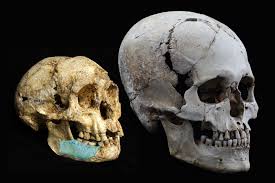
Homo floresiensis skull compared to a human skull. We are bigheaded monsters in comparison. Also, we got chins.

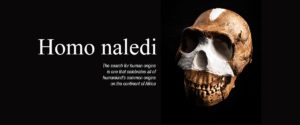
Homo naledi’s skull. I stole that picture from Wits University homepage because I really liked the quote and it turns out it’s too small really to read. Oh well.

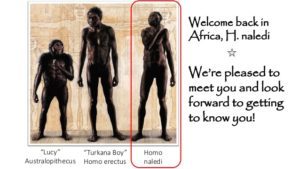
Some of our cousins. Homo erectus in the middle is our direct ancestor. So is Lucy, an Australopithecus, although she lived much longer ago.

Show transcript

Welcome to Strange Animals Podcast. I’m your host, Kate Shaw.

This week is part two of our humans episode. Last week we learned how modern humans evolved and about two of our close cousins, Neandertals and Denisovans. This week, we’re going to walk on the weirder side of the hominin world.

Before we get started, this episode should go live on July 31, 2017, one week before I fly to Helsinki, Finland for WorldCon 75! Don’t worry, I’ve got episodes scheduled to run normally until I get home. If you’re going to be in Finland between August 8 and August 17, let me know so we can meet up. On Thursday, August 10 and 4pm I’ll be on a panel in room 207 about how to start a podcast, so check it out if you’re attending the convention. I’ll also be in Oslo during the day on August 7 and have two birding trips planned with lunch in between, and I’d love you to join me if you’re in Oslo that day too. Then, two weeks after I return from Finland, I’ll be attending DragonCon over Labor Day weekend. blah blah blah this is old news

Now, let’s learn about some of our stranger distant cousins!

In 2003, a team of archaeologists, some from Australia and some from Indonesia, were in Indonesia to look for evidence of prehistoric human settlement. They were hoping to learn more about when humans first migrated from Asia to Australia. One of the places they searched was Liang Bua cave on the island of Flores. They found hominin remains all right, but they were odd.

The first skeleton they discovered was remarkably small, only a bit more than three and a half feet tall [106 cm] although it wasn’t a child’s skeleton. That skeleton was mostly complete, including the skull, and appears to be that of a woman around 30 years old. She’s been nicknamed the Little Lady of Flores, or just Flo to her friends. Officially, she’s LB1, the type specimen for a new species of hominin, Homo floresiensis.

But until very recently, that statement was super controversial. In fact, there’s hardly anything about the Flores remains that aren’t controversial.

At first researchers thought the remains were not very old, maybe only twelve or thirteen thousand years old, or 18,000 at the most. Stone tools were found in the same sediment layer where Flo was discovered, as were animal bones. The tools were small, clearly intended for hands about the size of Flo’s, which argued right off the bat that she was part of a small-statured species and wasn’t an aberrant individual.

The following year, 2004, the team returned to the cave and found more skeletal remains, none very complete, but they were all about Flo’s size. Researchers theorized that the people had evolved from a population of Homo erectus that had arrived on the island more than three quarters of a million years before, and that they had become smaller as a type of island dwarfism. A volcanic eruption 12,000 before had likely killed them all off, along with the pygmy elephants they hunted.

But as more research was conducted, the date of the skeletons kept getting pushed back: from 18,000 years old to 95,000 years old to 150,000 years old to 190,000 years old. Dating remains in the cave is difficult, because it’s been subject to flooding and partial flooding over the centuries. Currently, the skeletal remains are thought to date to 60,000 years ago and the stone tools to around 50,000 years ago.

When news of the finds was released, the press response was enthusiastic, to say the least. The skeletons were dubbed Hobbits for their small size, which made the Tolkien estate’s head explode, and practically every few weeks it seems there was another article about whether there were small people still living quietly on the island of Flores, yet to be discovered.

And, of course, there were lots of indignant scientists who were apparently personally angry that the skeletons were considered a new species of hominin instead of regular old Homo sapiens. Part of the issue was that only one skull has ever been found. It’s definitely small, and the other skeletal remains are all correspondingly small, and the stone tools are all correspondingly small, and the skull shows a number of important differences from that of a normal human. But that doesn’t necessarily mean it’s not a subspecies of Homo sapiens, and of course that needs to be investigated. But some of the arguments got surprisingly ugly. There were even accusations that the entire find was faked. One person even suggested that the skull’s teeth showed evidence of modern dental work.

Amid all this, two unfortunate things happened. First, in December 2004 an Indonesian paleoanthropologist named Teuku Jacob removed almost all the bones from Jakarta’s National Research Centre of Archaeology for his own personal study for three months. When he returned them, two leg bones were missing, two jaw bones were badly damaged, and a pelvis was smashed. Then, not long after, Indonesia closed access to Liang Bua cave without explanation, although the archeological community suspected it was due to Jacob’s influence, and didn’t reopen it until 2007 after Jacob died.

It’s important to note that Jacob was a proponent of the theory that the remains found in Liang Bua cave were microcephalic individuals of the prehistoric local population, not a new hominin species at all. He also had a history of keeping Indonesian fossils from being studied unless he specifically approved of the research.

At any rate, since then, repeated studies of the LB1 skull have suggested that Homo floresiensis is a separate species of hominin and not a Homo sapiens with evidence of pathology, whether microcephaly or another disease, or a population with a genetic abnormality. There’s still plenty of research needed, of course, and hopefully some more skulls will be found. But it seems clear that Homo floresiensis isn’t just a weird subspecies of Homo sapiens.

One of the more common theories in the last few years was that Homo floresiensis was descended from Homo erectus, although Homo erectus was a lot bigger and more human-like than the Flores little people. But results of a study released just a few months ago show that Homo floresiensis shared a common ancestor with Homo habilis around 1.75 million years ago. Homo floresiensis may have evolved before migrating out of Africa, or their ancestor migrated and evolved into Homo floresiensis. Either way, they spread as far as Indonesia before dying out around 50,000 years ago.

Other hominin remains have since been found on the island. Part of a jaw and teeth were found at Mata Menge on the island of Flores, some 50 miles away from the cave. It’s around 700,000 years old and is a bit smaller than the same bones in the later skeletons. Researchers think it’s an older form of Homo floresiensis.

Possibly not coincidentally, modern humans arrived on the island about 50,000 years ago, maybe earlier, bringing with them the arts of fire, painting, making jewelry from animal bones, and killing all of our genetic cousins.

We don’t know if humans deliberately killed the Homo floresiensis people or if they just outcompeted them. It does seem pretty certain that the two hominin species coexisted on the island for at least a while. It’s even possible that knowledge of the strange small people of the island has persisted in folk tales told by the Nage people of Flores. Stories about the ebu gogo have been documented for centuries. They were supposed to be little hairy people around three feet tall [one meter], with broad faces and big mouths. They were fast runners with their own language and would eat anything, frequently swallowing it whole. In some stories they sometimes kidnapped human children to make the children teach them how to cook, although the children always outwitted the ebu gogo.

Supposedly, at some point, tired of their children being kidnapped and their food being stolen, villagers gave the ebu gogo palm fibers so they could make clothes. The ebu gogo took the fibers to their cave, and the villagers threw a torch in after them. The fiber went up in flames and killed all of the ebu gogo.

Until the discovery of Homo floresiensis, anthropologists assumed the stories were about macaque monkeys. But there’s a genuine possibility that the ebu gogo tales are memories of Homo floresiensis. It’s not just cryptozoologists and bigfoot enthusiasts making the connection between the ebu gogo and Homo floresiensis. Articles and editorials have appeared in journals such as Nature, Scientific American, and Anthropology Today. At least, they did back when archeologists thought Flo was only about 12,000 years old.

But we still don’t know for certain when Homo floresiensis went extinct. There may be remains that are much more recent than 50,000 years ago. Locals mostly say there are no ebu gogo left but that they were still around about a century ago. I don’t know how long historical elements can persist in an oral tradition without becoming distorted. As we discussed in episode 17, about Thunderbird, oral history is easily lost if the culture is disrupted by invasion, disease, war, or other major episodes. But some stories are tougher than others, and those that are less history and more entertainment—although they may contain warnings too—can be very, very old.

Researchers have traced some traditional folktales, like Rumpelstiltskin, back some 4,000 or even 6,000 years, although not without controversy. But while Rumpelstiltskin is usually described as a small person, no one’s suggesting that story is about real events. It’s the juxtaposition of the Flores discoveries of small skeletons and the oral tradition or small people living on the island that got researchers excited. And as it happens, there is an oral tradition many miles and many cultures away from Flores that might be something similar.

Old Norse stories about trolls date back thousands of years. The trolls vary in appearance and sometimes have a lot of overlap with other monsters, but generally are described as big and strong, not very smart, often placid unless provoked, and usually evil, or at least godless. Sometimes they capture humans who outwit them to escape. In one story, a man named Esbern Snare wanted to marry a woman, but her father would only agree to the marriage if Esbern would build a church. Esbern struck a deal with a troll, who said he would build the church—on one condition. If Esbern couldn’t guess the troll’s name by the time the church was built, the troll would demand as his payment Esbern’s heart and eyes.

Esbern agreed, but he failed to trick the troll into telling him his name. On the final day, in despair Esbern threw himself down on the bank of a river, where he overheard the troll’s wife singing to her baby:

“Hush, hush, baby mine,

Tomorrow comes Finn, father thine,

To bring you Esbern’s heart and eyes

To play with, so now hush your cries.”

Esbern rushed back to the church and greeted Finn the troll by name. In some version of the story, Finn is so furious that he leaves the church incomplete in some way, usually a missing pillar. For those of you who aren’t familiar with the Rumpelstiltskin story, that’s a variant. Oh, and Esbern Snare was a real person who lived in the twelfth century, although I’m pretty sure he didn’t actually strike any deals with trolls.

But I do wonder if some elements of troll folklore might be derived from memories of Neandertal people. I’m not the first to suggest this, although it is a pretty fringey theory. And in the end, we just don’t have any way to know. But it is interesting to think about.

As you may remember from part one of the humans episode, Homo sapiens evolved roughly 200,000 years ago. But around the same time, or a little earlier, another cousin in our family tree was living in southern Africa. Remains of Homo naledi were only discovered in 2013 by some cavers. Partial skeletons from at least 15 individuals were recovered in one field season, but due to narrow cave passages, the field work had to be done by people of small stature who weren’t claustrophobic, mostly women.

Homo naledi is a mixture of primitive and advanced features. Primitive in this case means more like our ape ancestors, and advanced means more like modern humans. Homo naledi had long legs and feet that looked just like ours, but also had a small brain and fingers that are much more curved than ours—not characteristics that would look out of place a few million years ago, but surprising to discover in our family tree at about the same time that modern humans were evolving.

On the other hand (with curved fingers), evolution doesn’t have an end goal. Homo sapiens is not the pinnacle of creation to which all other living beings aspire. We’re just another animal, just another great ape. If Homo naledi was successful in their environment with a small brain, that’s all that matters from an evolutionary standpoint.

There are lots of remains left in the cave, so many in fact that some researchers are convinced they didn’t get there by accident. It’s possible that the cave was used as a burial pit, maybe even over the course of centuries. Bodies may have been dropped in a deep shaft and were then moved by periodic flooding to the remote chamber where they were found, or they may have been carried to the cave depths and left there.

Homo naledi wasn’t a direct ancestor of Homo sapiens, but they were definitely a kind of human—no matter how small their brains may have been.

You can find Strange Animals Podcast online at strangeanimalspodcast.blubrry.net. That’s blueberry without any E’s. If you have questions, comments, or suggestions for future episodes, email us at strangeanimalspodcast@gmail.com. We also have a Patreon at patreon.com/strangeanimalspodcast if you’d like to support us and get twice-monthly bonus episodes for as little as one dollar a month.

Thanks for listening!

Episode 025: Humans Part I (Neanderthals and Denisovans)

This week is our first two-parter ever! I don’t intend to do that often but there was just too much to go over for one episode. This week we’ll talk about humans: where we come from, how we evolved, and who our closest cousins are–Neanderthals and Denisovans.

Some young humans. Humans can do many surprising things, including surfing, making stained glass, and repairing helicopters. Most humans like the color blue and enjoy listening to music.

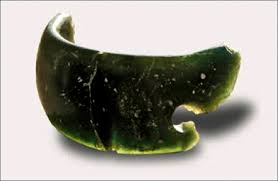
The bracelet found with Denisovan bones in a Siberian cave. Humans didn’t make or wear this lovely thing, Denisovan people did.

Further reading:

How to Think Like a Neandertal by Thomas Wynn and Frederick L. Coolidge

Show transcript:

Welcome to Strange Animals Podcast. I’m your host, Kate Shaw.

This will be our first two-part episode. There’s so much to cover with this topic that I decided to split it into two. This week we’re going to investigate an unusual family of great apes: both the living representative and their extinct relatives—and I don’t know why I’m saying “their extinct relatives,” because the great apes in question are known as Homo sapiens.

Humans tend to view ourselves as separate from the natural world. Some of us see ourselves as special, above other animals and better than them. Some of us see ourselves as despoilers of nature who can’t be trusted at all. But in reality, we’re neither angels nor devils. We’re animals too, and we fit neatly in the world because we evolved to live here, just like every other animal did too.

Humans have two major things going for us. First of all, we’re really smart. We’re only now learning the ways other animals show high intelligence, but even so, hands down we are the brightest apes in the circus. Our intelligence allows us to invent amazing things to make our lives more comfortable, like beds and shoes and medicine and umbrellas and podcasts. Unfortunately, our intelligence also lets us invent things that aren’t so nice, like bombs, because like our close cousins the chimpanzees, we can be real jerks.

But besides our intelligence, which is an obvious plus, we’ve got something very few other animals have: stamina, and the ability to shed heat efficiently, which makes us tireless hunters. In fact, that combined with our ability to make and use tools made early humans pretty much unstoppable.

Persistence hunting is only practiced by a few species of animal, like grey wolves, spotted hyenas, and humans. Humans aren’t especially fast runners compared to horses and deer and other prey animals, but we can just run on and on, sweating to cool ourselves, while our prey has to rest to cool down. One downside to this is that we can drive ourselves to heat exhaustion without realizing it, when conditions are just too hot to be constantly active.

I just looked this up, because I just realized I didn’t know if other female animals menstruate like human women. It turns out that female chimps do, along with a few other primates—and bats, for some reason. Solidarity with our bat girlfriends.

Actually, all placental mammals prepare a womb lining periodically, but when it turns out they don’t need it because they’re not going to have babies, they just reabsorb the material. Only a few species shed it, and even in humans we reabsorb most of it. Some researchers think we menstruate because it’s actually easier on the body to just dump the last of that unused stuff rather than spend extra energy absorbing it.

Now that we all know a few things about humans that we might not have known before, here’s a somewhat simplified overview of how humans evolved.

Humans and our ancestors are called hominins collectively. There were some apes 6 or 7 million years ago that were probably somewhat bipedal, and which are considered the earliest known hominins. We’re not sure which of the several species is our direct ancestor and which is our last shared ancestor with gorillas and chimpanzees.

Bipedalism is a defining trait of hominins. It took a long time to develop because there are a lot of skeletal and other changes needed to make it work effectively. By about 3 or 4 million years ago, the Australopithecines had evolved, and we know they walked upright at least part of the time because we have a fossilized track.

But why did bipedalism develop in the apes at all? Of all the apes, only humans developed bipedalism, and it actually still gives us a lot of problems: weak backs that are subject to injury, for instance, and even increased difficulty in childbirth, since the human pelvis had to change so much to adapt to walking upright. The cause was probably habitat change.

If you look at a map of Africa, you’ll see what looks like a string of lakes on the eastern side of the continent. Those lakes, and the volcanoes scattered around the area, including Mount Kilimanjaro, are caused by the East African Rift. Researchers are still working out what exactly is causing the rift, but we do know what’s happening in general. The tectonic plate Africa sits on, which is naturally known as the African Plate, is splitting in two.

This sounds alarming, especially if you happen to live there, but it’s a ridiculously slow process from our point of view. The rift widens barely seven millimeters a year. But that adds up when you’re talking millions of years, and the rift started at least ten million years ago and will continue for another ten million years until the plates separate completely and those lakes become part of the ocean.

Around the time the rift started forming, the East African plateau rose up, accompanied by a lot of volcanic activity. This caused a major change in the local habitats. What had once been thick forest and lush jungle became open woodland and savanna. Grasses grew tall, there wasn’t as much cover, and the animals that evolved and moved into the area were fast runners. It wasn’t a great area to be a knuckle-walker like other apes, but it was ideal for apes who could stand and walk upright.

The rift is where we’ve found so many important hominin fossils, including that of Lucy. Lucy was an Australopithecus who lived 3.2 million years ago. In Ethiopia, where the partial skeleton was found, she’s known as Dinknesh, which means “you are marvelous” in the local language.

That kind of makes me want to cry a little. Lucy wasn’t just some ape who could walk upright part of the time while carrying things. She was our great-great-great-a million times-great grandma.

[oops copyright infringement hahahahahahahahahahaha]

By around two and a half million years ago, Homo habilis had evolved. Homo habilis probably still looked a lot like an ape, but was also getting recognizably human. They walked upright all the time and made stone tools. Then, a little less than two million years ago, Homo erectus appears in the fossil record.

Homo erectus was definitely human-looking, with a human-like nose, ordinary human-sized height, and very little hair except on the head. And Homo erectus had dark skin, which is linked to the loss of body hair.

By a little less than one million years ago, Homo erectus was wearing clothes, cooking their food, and were adept in making and using stone tools. If you went back in time and met a Homo erectus, you’d think you were just meeting a really weird-looking person—and you would be right. Also, where did you get the time machine and can I get a ride in it?

By 200,000 years ago, modern humans, Homo sapiens, had fully evolved. If you could go back in time and meet those early humans, they would look, act, and think like the people you see around you today.

Of course, evolution isn’t as cut and dried as it sounds here. When one species evolves over long, slow generations into another, that doesn’t mean the population it evolved from vanishes. You may have heard the so-called argument against evolution: if humans evolved from monkeys, why are there still monkeys?

Well, first of all, apes and monkeys are different animals entirely. Both monkeys and apes, and all the other primates, evolved from a distant ancestor that wasn’t a monkey or an ape, but which had the characteristics that made it distinctly primate instead of feline or canine or hippopotamine…that’s not a word.

Second of all, species evolve because of environmental pressures, and those same pressures may not be present in all parts of the species’s range. Homo erectus survived well into the era of modern humans, and in fact we probably killed them off, either directly (because remember, we can be jerks) or indirectly by outcompeting them in the same habitats.

At some point, humans started moving out of Africa into other parts of the world, maybe about 55,000 years ago although we’re not really sure yet. Researchers are still working it all out, but some research suggests there might be more than one wave of migration, or that the migration started much earlier than 55,000 years ago.

The hominins I’ve mentioned so far weren’t the only ones around. Those were only our direct ancestors. There were others who split off from our ancestors and evolved separately, and if they hadn’t all died out (again, thanks to us, Homo sapiens jerkuses), we’d have populations of living cousins who are much more closely related to us than the other great apes. So let’s learn about some of them!

I’ve actually been putting off doing this episode because right now, we’re in the middle of a golden age of hominin discoveries. I kept thinking that if I just waited a few more weeks or months, new findings might very well be announced. In fact, right after I started research, sure enough, new information was published about a recently discovered Denisovan baby tooth.

There are two known groups of hominins who aren’t direct human ancestors to Homo sapiens, Neanderthals and Denisovans. They were around at the same time as modern humans for at least a while, but not usually in the same places.

Neanderthals spread throughout parts of northern Europe and Asia, and the Denisovans spread into Asia and down through the Malay Archipelago and into Australia. Again, I need to stress that these were not direct human ancestors. While they could and did interbreed with Homo sapiens, and many modern populations carry traces of Neanderthal and Denisovan DNA, there is no practical genetic difference in a human from one continent or background and a human from a different continent or background. We’re all human.

Around 1.8 million years ago, a population of Homo erectus migrated into Eurasia, where they gave rise to Neanderthals and Denisovans. When humans later migrated into the same areas, they encountered their close cousins and lived alongside them for possibly as long as 10,000 years before the human population increased to the point that…those other guys? They had to go.

The first Neanderthal fossils were discovered in 1829 in Belgium, but it’s the 1856 discovery of fossils in a cave in Neader Valley in Germany that gave us their name. “Thal” [pronounced like the word tall] means dale or valley in German, spelled with a TH, which is why so often the name is pronounced Neander-thal. It doesn’t really matter how you pronounce it.

Anyway, there’s still a lot of controversy regarding whether Neanderthals are a subspecies of Homo sapiens or a separate species in their own right. One incredibly “clever” and just precious suggestion in 1866 was that the group be named Homo stupidus. In fact, Neanderthals were probably as smart as humans and were definitely bigger and stronger than us (so don’t make jokes about them). They were well adapted to the cold with a barrel chest, relatively shorter limbs than humans, and an overall more robust build. They probably had better eyesight than we do too. Genetic evidence suggests that some populations may have had light skin and red or blond hair.

But it’s possible they weren’t as socially adept as humans. The average Neanderthal social group consisted of a close family unit—mother, father, and kids, or brothers and their mates, who were not related to one another, plus their kids—rather than extended relatives and related families, as is typical among humans. It’s likely that several family groups sometimes came together to share particular bonanzas in food. Neanderthals frequently killed mammoths, and a full-grown mammoth could feed a whole lot more than one family before the meat spoiled.

Grandparents probably weren’t usually part of most family groups not because no one liked their Grandma back then, but because Neanderthals had short, brutal lives. They speared mammoths at close range to kill them. That is metal as heck, but it’s also really hard on the body. It was rare for a Neanderthal to survive past 30, and by then he or she would look like an old, old person due to all the injuries sustained while hunting.

The authors of the marvelous book How to Think Like a Neandertal, which I’m drawing from quite a lot here, point out that Neanderthals and rodeo cowboys show similar patterns of injury over their lifetimes. And Neanderthals didn’t have hospitals and doctors they could visit.

While Neanderthals did make stone tools and use fire, analysis of their campsites shows sometimes interesting compared to human campsites. There’s no central fire pit. Almost every individual had their own fire where they did their own thing. In prehistoric human campsites, way back 25,000 years ago and even more, there’s generally one central fire that everyone gathers around. We still do this the world over. Can you even imagine going to summer camp and every kid spends the evening alone, tending their own little campfire and not singing camp songs, not spelling spooky stories, not eating s’mores together?

In addition, while there have been some controversial theories over some findings, as far as we can determine, Neanderthals didn’t make art. Some perforated seashells have been found at two Neanderthal sites in Spain that researchers think may have been worn as pendants, and we have evidence that Neanderthals, like other hominins for at least 300,000 years, used mineral pigments as body decoration. But they didn’t appear to use ceremonial items, didn’t create clothing beyond rough hide blankets or wraps, and they only had the barest minimum of funerary rites. Neanderthals may have been strong and smart, but they don’t appear to have been especially creative by our standards.

One old man Neanderthal, who was probably not more than 35 when he died, was so injured that he could probably not walk or do much of anything else by the final years of his life. He had lost most of his teeth and wouldn’t have been able to eat. But he lived for years, because someone helped him. Someone brought him food. Someone probably chewed it for him. And when he died, someone tucked him in a shallow hole and scattered dirt over his body. So however different Neanderthals were from us, they were also people.

By about 40,000 years ago, Neanderthals were extinct. That was probably too long ago to have left any traces in human collective memory, but that’s something I’ll bring up in part two of this episode next week.

We still don’t know much about the Denisovans because we only discovered the first specimen, a fragment of a finger bone, about ten years ago. The bone is from a young woman who lived about 41,000 years ago and was found in the Denisova Cave in Siberia, in the mountains not far from China and Mongolia. Since then, scientists have also found some teeth from two different adult males, and a baby tooth from a little girl who lived much earlier than the others.

According to DNA testing done on the finger bone, Woman X, as the finger’s owner is called, was neither a modern human nor a Neanderthal, although she was related to both and could interbreed with both. Denisovan DNA has been found in some populations of humans. Not only that, Woman X contained some Neanderthal DNA and DNA from an ancient human lineage that we don’t yet recognize. So there’s at least one other hominin we haven’t yet discovered. A toe bone has also been found that may be from a hybrid Denisovan-Neanderthal, but we don’t know for sure yet, since studies are still ongoing.

We don’t know what the Denisovans looked like, but just going from Woman X’s finger bone, which is much thicker than even a big human’s finger bones, we can guess they were pretty robust people. They may have looked a lot like Neanderthals. Some fossils thought to belong to Neanderthals may actually be Denisovan, so I bet a lot of museum and university collections are being examined closely right about now.

The Denisova Cave was used as a home by humans, Neanderthals, and Denisovans at different times going back some 125,000 years, and as recently as the 18th century, when a Russian hermit named Denis lived there. A bracelet discovered in the same layer of soil where Woman X’s finger bone was found has been dated to about the same time as the bone and is not a human artifact as far as archaeologists can tell.

It’s a green chlorite bracelet, carefully carved and beautifully polished. It was probably worn on the right wrist. It’s delicate, fragile, and probably belonged to someone important who wore it on important occasions. In other words, Denisovans wore and probably made jewelry. Unlike Neanderthals, they probably had important occasions.

A marble ring was found at the same time as the bracelet, but no information on it has been released yet. Hopefully, it won’t be long before we learn more about these new cousins of ours. They seem like interesting people.

That’s it for part one of our episode on humans. Next week we’ll take a look at some less closely related and more mysterious human relations, especially ones known as Hobbits for their small stature. Maybe by then you’ll have gotten that Toto song out of your head.

You can find Strange Animals Podcast at strangeanimalspodcast.blubrry.net. That’s blueberry without any E’s. If you have questions, comments, or suggestions for future episodes, email us at strangeanimalspodcast@gmail.com. If you like the podcast and want to help us out, leave us a rating and review on Apple Podcasts or Podchaser, or just tell a friend. We also have a Patreon at patreon.com/strangeanimalspodcast if you’d like to support us for as little as one dollar a month and get monthly bonus episodes.

Thanks for listening!